




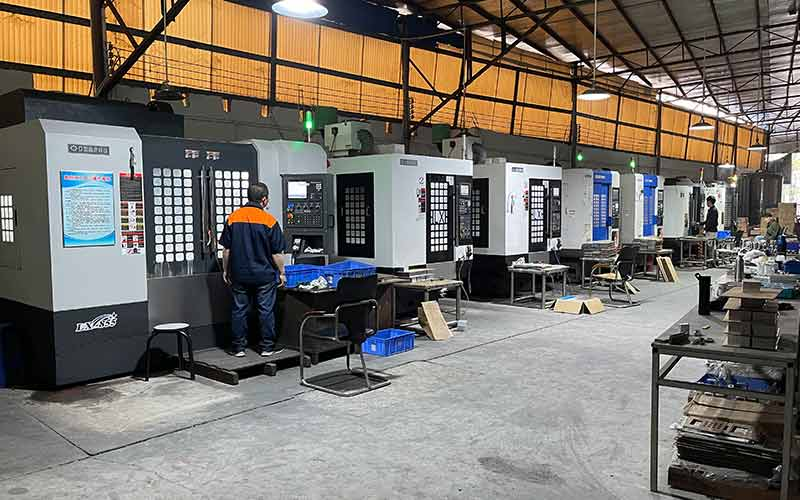
When people first come across precision sheet metal fabrication, it is easy to think the word “precision” simply means tighter tolerances.
That is only part of it.
A good sheet metal part has to survive more than the inspection table. It has to be cut cleanly, bent without creating unexpected distortion, welded without pulling the assembly out of shape, finished correctly, and—most importantly—fit into the product it was designed for.
A bracket with four holes may look simple on a drawing. But if two of those holes locate a PCB or another assembly, a small error in bending can make the entire part difficult to use.
That is why precision sheet metal fabrication is better understood as a controlled manufacturing process, rather than one particularly accurate cutting method.
It starts with the drawing and continues through cutting, forming, welding, hardware installation, finishing and inspection.
What Is Precision Sheet Metal Fabrication?
Precision sheet metal fabrication is the process of turning flat metal sheets into accurately manufactured parts and assemblies using a combination of processes such as:
- découpe au laser
- CNC punching
- bending and forming
- stamping
- welding
- hardware insertion
- riveting
- deburring and grinding
- powder coating and other surface finishes
- assembly and inspection
The finished product might be a small mounting bracket or a complete electrical enclosure.
The important point is that not every dimension needs the same level of control.
Suppose an enclosure has a 400 mm outside panel and several connector holes on the rear face. A small variation in the overall panel length may have little effect on the product. A similar variation in the connector locations could prevent the electronics from fitting.
Precision fabrication is therefore not about putting the tightest possible tolerance on every number in the drawing.
It is about understanding which dimensions matter and keeping those dimensions stable throughout production.
How Hofengfab Approaches Precision Sheet Metal Fabrication
At Hofengfab, we do not treat sheet metal fabrication as a single cutting or bending operation.
A typical part may pass through laser cutting, bending, welding, hardware installation, sanding, finishing and final inspection before it is ready for delivery.
Hofengfab's sheet metal capabilities include laser and waterjet cutting, bending, forming, stamping, welding, hardware installation and assembly, as well as finishing processes such as sanding, powder coating, screen printing, heat treatment and plating. The company supports both prototype development and production orders with no stated minimum order quantity on its main manufacturing page.
That broader process matters when a customer is developing a new part.
Sometimes a design problem does not show up during laser cutting. It appears later, when a flange is bent, a nut has to be installed, or two welded pieces have to fit together.
Finding that problem before production is usually much easier than correcting it after a batch has already been made.
How Does Precision Sheet Metal Fabrication Work?
1. Start With the Drawing, Not the Machine
Most projects begin with a 2D drawing, a 3D CAD model, or both.
Before material is cut, several questions should already have answers:
What material is being used?
What is the sheet thickness?
Which dimensions are critical?
Are there cosmetic surfaces?
Which areas will be welded?
Does the product require threaded inserts, studs or other hardware?
Will it be powder coated, plated, anodized or polished?
Does it fit with another component?
These questions sound basic, but they can determine how smoothly the entire job goes.
A feature that looks perfectly normal in CAD can be awkward on the shop floor.
A hole may be too close to a bend.
A flange may be difficult to reach with normal tooling.
A weld may sit exactly where a cosmetic surface needs to remain flat.
Or a designer may specify a special formed feature when a standard solution would work just as well.
This is why manufacturability review matters before production starts.
2. Laser Cutting the Flat Pattern
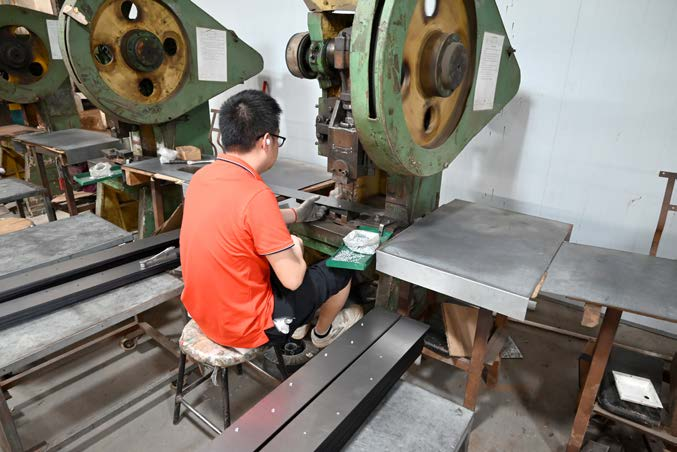
Laser cutting is one of the most common starting processes in modern sheet metal fabrication.
The machine follows a programmed path to produce:
- outside profiles
- mounting holes
- slots
- ventilation patterns
- connector openings
- tabs
- internal cutouts
One major advantage is flexibility.
Changing a hole position or altering a cutout usually requires a program change rather than an entirely new cutting die.
This makes laser cutting useful for prototypes, customized parts and repeat production.
At Hofengfab, metal cutting services include laser cutting as well as waterjet cutting, CNC punching/nesting and other forming operations. The company lists stainless steel, carbon steel and aluminum alloys among the materials handled by its metal-cutting operation.
But a good laser-cut blank is only the beginning.
A part can be perfect while flat and still become inaccurate during bending or welding.
3. CNC Bending: Where the Drawing Meets Real Metal
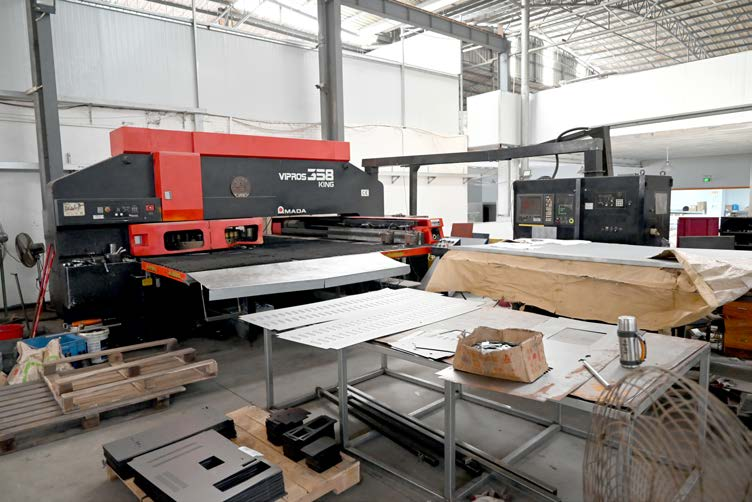
A 90-degree bend looks very simple on a CAD model.
Real metal is less obedient.
When sheet metal is formed in a press brake, factors such as material grade, thickness, grain direction, tooling and bend radius influence the result.
The metal also has springback.
That means it tends to recover slightly after the bending force is removed.
An experienced fabricator takes this into account rather than assuming that the programmed angle alone guarantees the finished angle.
Standard Bend Radii Usually Make Life Easier
One of the easiest ways to make a sheet metal part unnecessarily expensive is to specify unusual bend geometry without a functional reason.
Standard bend radii are generally easier to form with existing tooling.
Special radii, unusually short flanges or difficult formed features may require:
- additional setup
- different tooling
- slower forming
- secondary operations
That does not mean custom geometry should always be avoided.
Sometimes it is genuinely needed.
The useful question is:
Does the product need this feature, or does the drawing simply happen to contain it?
That distinction can have a real effect on fabrication cost.
4. Welding Adds More Than a Weld Bead
Some parts finish after cutting and bending.
Others need multiple pieces joined together.
Common methods include:
- TIG welding
- MIG welding
- spot welding
- laser welding
- riveting
- vis
- clinching hardware
Hofengfab lists robot CO₂ welding, robot laser welding, laser-platform welding and handheld laser welding among its sheet metal equipment, alongside laser cutting, CNC punching, bending and automatic deburring equipment.
For precision work, the important issue is not simply whether the weld is strong.
It is what happens to the metal around the weld.
Welding Can Change the Shape of a Part
Heat causes expansion.
As the welded area cools, it contracts.
On thin sheet metal, that movement may cause:
- warping
- bowing
- twisting
- movement around holes
- changes to mating surfaces
That is why welding sequence, fixtures and heat control matter.
For some products, redesigning a joint to use rivets or mechanical fasteners can reduce welding work. In other applications, welding is absolutely necessary.
The decision should be based on the function of the product rather than cost alone.
5. Material Selection Affects Much More Than Material Price
People sometimes compare materials only by price per kilogram.
For fabrication, that is incomplete.
Material selection also affects:
- cutting
- flexion
- welding
- résistance à la corrosion
- surface finishing
- availability
- appearance
- weight
Acier laminé à froid
Cold rolled steel is widely used for brackets, cabinets, machine structures and general industrial parts.
It is relatively economical and works well with bending and welding.
Where corrosion resistance is required, the finished component can be plated, painted or powder coated.
Acier inoxydable
Stainless steel is commonly used when corrosion resistance, appearance or cleaning requirements are important.
Applications often include medical equipment, laboratory products, food-related machinery and industrial equipment.
The fabrication itself may be straightforward, but polishing or cosmetic grinding can add significant labor.
Aluminium
Aluminum is widely used where weight is an important consideration.
Typical applications include:
- electronic enclosures
- communication equipment
- panels
- housings
- transportation-related components
Different aluminum alloys do not behave identically during forming, so the alloy should be considered when designing bends.
Copper and Brass
Copper and brass may be selected for conductivity, thermal performance or appearance.
They are less common than steel and aluminum for general sheet metal structures but are useful in the right application.
Hofengfab's sheet metal prototyping page lists stainless steel, aluminum, copper, brass and galvanized steel among its available fabrication materials.
6. Surface Finishing Should Be Planned Early
Surface treatment is often treated as the final step.
From a manufacturing point of view, it should be considered much earlier.
Typical options include:
- powder coating
- plating
- passivation
- anodizing
- brushing
- polishing
- screen printing
- engraving
A hidden internal bracket does not need the same cosmetic standard as a front panel that a customer sees every day.
Similarly, an outdoor electrical enclosure may need very different corrosion protection from an indoor chassis.
Do Prototypes Need the Final Cosmetic Finish?
Not always.
During early prototype development, the main question may simply be:
Does the part fit?
If the prototype is being used to verify dimensions and assembly, processes such as decorative printing or engraving may sometimes be postponed until the design is confirmed.
This avoids putting time and money into a cosmetic operation on a part that may still change.
What Are the Advantages of Precision Sheet Metal Fabrication?
Repeatability
The biggest advantage is often not making one accurate part.
It is producing the next 50, 500 or 5,000 parts so that they continue to fit the same assembly.
CNC-controlled cutting and forming help make that possible.
Flexibility
Laser cutting and CNC bending allow many designs to be manufactured without dedicated hard tooling.
This makes the process useful during product development and for customized components.
Efficient Design Changes
When a hole, slot or profile changes, many modifications can be made digitally.
This is particularly useful during prototyping.
Broad Material Selection
Sheet metal fabrication can work with stainless steel, carbon steel, aluminum, galvanized materials, copper, brass and other metals depending on the product.
Several Operations Can Be Managed Together
Cutting is rarely the only operation required.
A finished part may include:
cutting → bending → hardware → welding → grinding → coating → assembly.
Keeping these operations within a coordinated workflow can reduce unnecessary handoffs between suppliers.
What Actually Determines Sheet Metal Fabrication Cost?
A small sheet metal part is not automatically a cheap part.
This is something that becomes obvious once you look at how it is made.
Consider two components using roughly the same amount of metal.
Part A
Laser cut.
Deburr.
Done.
Part B
Laser cut.
Six bends.
Four PEM inserts.
Two welded joints.
Grinding.
Powder coating.
Silkscreening.
Assembly.
The material cost may be similar.
The manufacturing cost will not be.
A useful way of looking at sheet metal fabrication cost is therefore:
How many operations have to happen before this sheet becomes a finished part?
The cost reference you supplied makes the same broader point: although sheet metal fabrication can be economical, unnecessary geometry and additional manufacturing operations can quickly add labor, lead time and cost.
How to Reduce Precision Sheet Metal Fabrication Costs
Reducing cost does not mean making the product worse.
It means removing manufacturing difficulty that provides little or no functional benefit.
Use Standard Bend Geometry Where Possible
Standard bend radii and tooling-friendly flange dimensions usually make production easier.
Do not specify a special bend simply because it looks slightly better in CAD.
Use it when the product actually needs it.
Avoid Unnecessary Machining
Sheet metal parts sometimes include:
- machined pockets
- blind holes
- complicated chamfers
- highly specific secondary features
Sometimes these are necessary.
But every machining operation added to a fabricated part changes the production route.
Before adding one, ask whether the same function can be achieved with normal sheet metal geometry.
Use Standard Hardware
The cost of a special fastener is not always the biggest issue.
Availability can be worse.
An unusual insert or stud may have:
- a high minimum order
- a long purchasing lead time
- limited material options
When possible, standard hardware generally simplifies purchasing and replacement.
Use Off-the-Shelf Components Where They Make Sense
It can sometimes be technically possible to manufacture a feature directly into a sheet metal part.
That does not automatically mean it is the economical choice.
An off-the-shelf guide, spacer, insert or mounting component may be simpler than building a complicated custom feature into the sheet.
Include a Hardware BOM
One of the simplest ways to avoid unnecessary back-and-forth is to tell the fabricator exactly what hardware is required.
Instead of:
M3 nut
provide the actual part number or specification where possible.
A hardware BOM can include:
- inserts
- studs
- vis
- rivets
- standoffs
- special hardware
- finish requirements
The cost-saving material you provided also emphasizes both standard hardware and a clear BOM as practical ways to reduce ambiguity and unnecessary delays during quoting and production.
Do Not Overload the Manufacturing Drawing
The manufacturer needs enough information to make the part correctly.
They do not necessarily need every component from the complete machine assembly.
Too much unrelated information can make drawings harder to read.
A clean manufacturing drawing should make critical information obvious.
Put Tight Tolerances Where They Matter
This point is particularly important.
Specifying a very tight tolerance on every dimension does not automatically make a design “better.”
It usually makes the part harder to manufacture and inspect.
Identify the features that control:
- assembly
- alignment
- sealing
- component location
- interfaces with other parts
Those are the dimensions that deserve the most attention.
What Parts Can Hofengfab Manufacture?
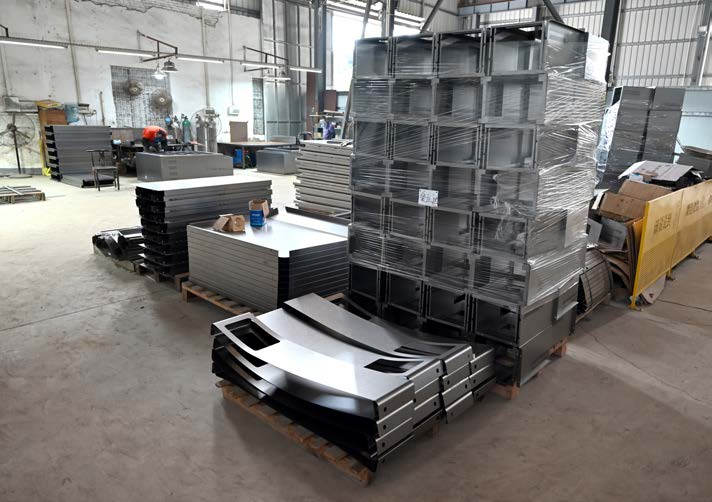
Hofengfab works with custom fabricated products including enclosures, brackets, assemblies, weldments, cabinets, housings and other sheet metal parts and prototypes.
For electronics and electrical projects, common applications can include:
- armoires électriques
- electronic chassis
- boîtes de dérivation
- industrial control boxes
- server and rack components
- mounting brackets
- machine covers
- equipment panels
- cabinets
- welded assemblies
Enclosures are a particularly relevant area for Hofengfab.
The company's product range includes electrical enclosures, server rack cabinets, junction boxes, NEMA enclosures, industrial enclosures, telecommunication enclosures, EV charger enclosures and stainless-steel and aluminum enclosure options.
And enclosure manufacturing is a good example of why precision sheet metal fabrication involves more than “making a box.”
The connector openings must line up.
The internal mounting points need to match the electronics.
The door has to close.
Hardware has to remain in the correct position.
Welding cannot pull the body badly out of square.
The surface has to match the customer's appearance requirement.
Several fairly ordinary manufacturing details have to work together.
Industries Using Precision Sheet Metal Fabrication
Electronics and Electrical Equipment
Electrical products often need accurate openings for:
- switches
- displays
- fans
- connectors
- cable glands
Inside the enclosure, PCBs and other components may also depend on precisely located studs, inserts and brackets.
This makes dimensional relationships particularly important.
Industrial Equipment
Machine manufacturers regularly use fabricated metal for:
- guards
- control cabinets
- covers
- frames
- brackets
- mounting plates
Many of these parts are not visually complicated.
They simply have to fit correctly every time.
Medical Equipment
Medical and laboratory products often bring additional requirements involving material, surface condition and cleanability.
Stainless steel and aluminum are common choices depending on the application.
Automotive and Electric Vehicles
Sheet metal components can be used for housings, brackets, equipment structures, panels and related assemblies.
Prototype-to-production flexibility can be useful as the design evolves.
Aerospace, Robotics and Other Engineering Applications
Hofengfab currently lists automotive, medical, electronics, industrial, aerospace & defense, electric vehicle, robotics and oil & gas among the industries it serves.
What Hofengfab Focuses on Before a Part Goes Into Production
A good drawing tells us what the finished component should look like.
It does not always tell us what will happen while the part is being manufactured.
Before fabrication, it is useful to review details such as:
- bend positions
- flange lengths
- hole-to-bend relationships
- welding locations
- inserted hardware
- mating dimensions
- cosmetic surfaces
- finishing requirements
The goal is not to redesign the customer's product.
It is to identify manufacturing issues while they are still easy to change.
This matters especially during prototyping.
Moving a hole in CAD may take minutes.
Finding the same problem after 500 parts have been cut is a very different situation.
Hofengfab supports rapid prototyping and full production runs, while its broader manufacturing capabilities also include CNC machining, 3D printing and injection molding. That can be useful when a project contains both fabricated sheet metal and other custom components.
Quality Control in Precision Sheet Metal Fabrication
Precision does not stop when the machine stops.
A part may look correct and still have a critical hole, angle or mating surface outside the drawing requirement.
Inspection therefore needs to follow the function of the component.
For a simple bracket, only several dimensions may be particularly important.
For a welded enclosure, checks might include:
- overall size
- squareness
- mounting holes
- bend angles
- hardware position
- mating surfaces
Hofengfab's website states that it operates ISO 9001/ISO 13485/ISO 14001-certified systems, and its manufacturing pages describe dimensional inspection using calibrated equipment. Its broader equipment listing includes coordinate measuring equipment, 2.5D measuring systems, height gauges, micrometers, roughness instruments and other measuring tools.
The important point is not to measure something simply because it can be measured.
It is to make sure the features affecting function stay under control.
The Future of Precision Sheet Metal Fabrication
The future of the industry is often described with one word:
automation.
That is true, but it is only part of the story.
A faster laser alone does not solve every manufacturing problem.
The larger change is that separate processes are becoming connected.
Engineering data can move into cutting software.
Programs can be stored for repeat bending jobs.
Material handling can become automated.
Robots can perform repetitive welding and polishing operations.
Inspection information can be recorded digitally.
Hofengfab's own sheet metal equipment mix already reflects part of this direction, with robotic welding and polishing equipment listed alongside laser cutting, CNC punching, bending and automatic deburring systems.
But automation does not remove the need for manufacturing experience.
A laser can cut exactly where the program tells it to.
It cannot always tell the designer that a hole is too close to a bend.
A bending machine can repeat an angle.
It does not automatically know why one mating dimension matters more than another.
A robot can produce a repeatable weld.
It cannot rescue a product that was poorly designed for welding.
For precision sheet metal fabrication, the best results still come from combining good equipment with practical manufacturing judgment.
Need a Quote for a Precision Sheet Metal Fabrication Project?
If you already have a 2D drawing or 3D CAD model, Hofengfab can review the project based on the actual material, geometry, quantity, tolerances, hardware and finishing requirements.
Our sheet metal capabilities cover cutting, bending and forming, welding, hardware installation, finishing and assembly, with support for prototypes as well as production quantities.
For an enclosure, bracket, chassis, panel, cabinet or other custom sheet metal part, the most useful information to include with an RFQ is:
Matériau
Sheet thickness
Quantity
Finition de surface
Critical tolerances
Hardware requirements
2D drawing / 3D CAD file
A little more information at the beginning usually saves a lot of communication later.
Send your drawings to Hofengfab and let our team review your next precision sheet metal fabrication project.
CONTACT US : mia@hofengfab.com