




Electric vehicles are often described as “batteries on wheels.” It is a useful phrase, but it leaves out a large part of the vehicle.
The battery still needs a structure around it. The body has to protect passengers. High-voltage electronics need sealed and shielded enclosures. Cooling systems need brackets, covers and protective components. Underbody parts must survive water, stone impact, vibration and corrosion.
A surprising amount of this work still begins with a flat sheet of steel or aluminum.
This matters because electric vehicles are no longer a small, experimental market. Global electric-car sales passed 20 million in 2025, accounting for one in four new cars sold worldwide. China alone produced and sold more than 16 million new-energy vehicles during the year, with new-energy vehicles representing more than half of domestic new-car sales.
At that scale, the question is no longer whether electric vehicles use sheet metal. The more useful question is where they use it, what performance is expected from it, and which applications are likely to remain as vehicle manufacturing changes.
Electrification Removes Some Parts but Creates a Different Metal Problem
An electric vehicle does not require an exhaust system, fuel tank or many of the brackets and heat shields found around a combustion engine. Looking only at those components, it would be reasonable to assume that electrification reduces demand for fabricated metal parts.
But the comparison is not that simple.
The electric powertrain adds a large battery pack, high-voltage distribution equipment, inverters, onboard chargers, DC-to-DC converters and a much more involved thermal-management system. These components do not always create a greater number of sheet metal parts, but they make the remaining parts more important.
A battery cover, for example, may look like a relatively simple panel. In practice, it may need to maintain flatness across a large area, provide a reliable sealing surface, resist vibration and corrosion, and avoid excessive deformation during an impact.
Battery enclosure research increasingly treats structural strength, weight, vibration performance and crash protection as connected design problems rather than separate requirements.
This is one of the biggest changes brought by electric vehicles: a part that appears simple may now carry several safety and performance functions at the same time.
The Battery Pack Is the Clearest Example

The battery system is probably where the relationship between electric vehicles and sheet metal is easiest to see.
Depending on the vehicle architecture, the battery structure may contain a tray, side rails, crossmembers, an upper cover, a lower protection plate, mounting brackets and internal dividers. Some designs rely heavily on aluminum extrusions or castings. Others use stamped steel, roll-formed sections, fabricated aluminum panels or a combination of several processes.
There is no single material or manufacturing method that has won every application.
The battery enclosure must protect the cells from road debris, water, vibration and vehicle impact. It also has to connect accurately with the vehicle floor and surrounding body structure. If the pack becomes part of the vehicle’s load-bearing structure, dimensional control becomes even more important.
WorldAutoSteel’s electric-vehicle body concept, for example, uses cold-stamped, roll-formed and tailor-welded advanced high-strength steel components in its battery carrier and lower protection structure. It is only one engineering concept, not a universal production formula, but it shows that formed sheet steel can still play a central role in future battery architectures.
For a precision sheet metal manufacturer, the opportunity is not limited to producing a rectangular battery box. It may involve large thin panels that must stay flat after welding, reinforced covers, impact shields, mounting parts or prototype structures that will later be redesigned for mass production.
The difficult part is usually not cutting the material. It is controlling the complete result after forming, welding, surface treatment and assembly.
Lightweighting Does Not Mean Using Aluminum Everywhere

Electric vehicles carry a significant amount of battery weight, so reducing the mass of the surrounding structure can improve range, handling and efficiency.
This has increased interest in aluminum. Industry research indicates that battery-electric vehicles generally contain more aluminum than comparable combustion-engine vehicles, and that aluminum lightweighting is expected to remain economically attractive even as battery technology improves.
That does not mean steel is disappearing.
Advanced high-strength steels can provide high crash performance with relatively thin material. Aluminum offers low weight and corrosion resistance but brings different welding, forming and cost considerations. Stainless steel may be selected for specific shields, brackets or parts exposed to demanding environments.
In reality, many electric vehicles are becoming mixed-material structures. The engineering team may use cast aluminum in one section, high-strength stamped steel in another, and precision-fabricated sheet components around the battery, electronics or thermal system.
This mixed-material approach creates its own manufacturing challenges. Forming behavior is different. Welding methods are different. Dissimilar-metal contact can introduce corrosion risks. Surface treatment and fastening methods need to be considered early, not after the parts have already been made.
Power Electronics Give Metal Enclosures More Work to Do
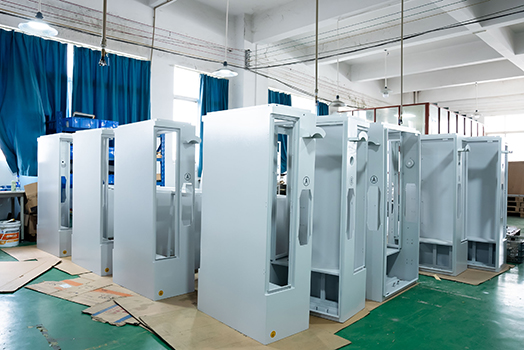
The inverter, onboard charger and high-voltage distribution system are another important part of the story.
Some of these housings are die-cast aluminum, particularly when the enclosure is also used as a heat sink or includes an integrated cooling channel. Others use formed covers, metal shielding plates, brackets or fabricated assemblies.
In other words, not every metal electronics box is automatically a sheet metal opportunity.
Where sheet metal is used, however, the requirements can be demanding. The enclosure may need to help manage electromagnetic interference, control vibration, provide grounding, protect internal electronics and maintain a seal around connectors and cooling passages.
SAE research on electric-vehicle power electronics identifies thermal control and the sealing of inverter enclosures and coolant channels as major packaging challenges. More recent development work also notes that metal panels are required in certain inverter designs for electromagnetic-interference compliance, even though thin covers can create additional stiffness and vibration problems.
This changes how such parts should be designed and quoted.
A supplier may successfully hold the laser-cut dimensions but still have a problem if the cover distorts during welding. A coating may look acceptable but interfere with grounding points. A gasket flange may meet the drawing before assembly but become uneven after hardware is installed.
These are process-control problems, not simply cutting and bending problems.
Is Megacasting Going to Replace Automotive Sheet Metal?
This is the uncomfortable question for many metal suppliers.
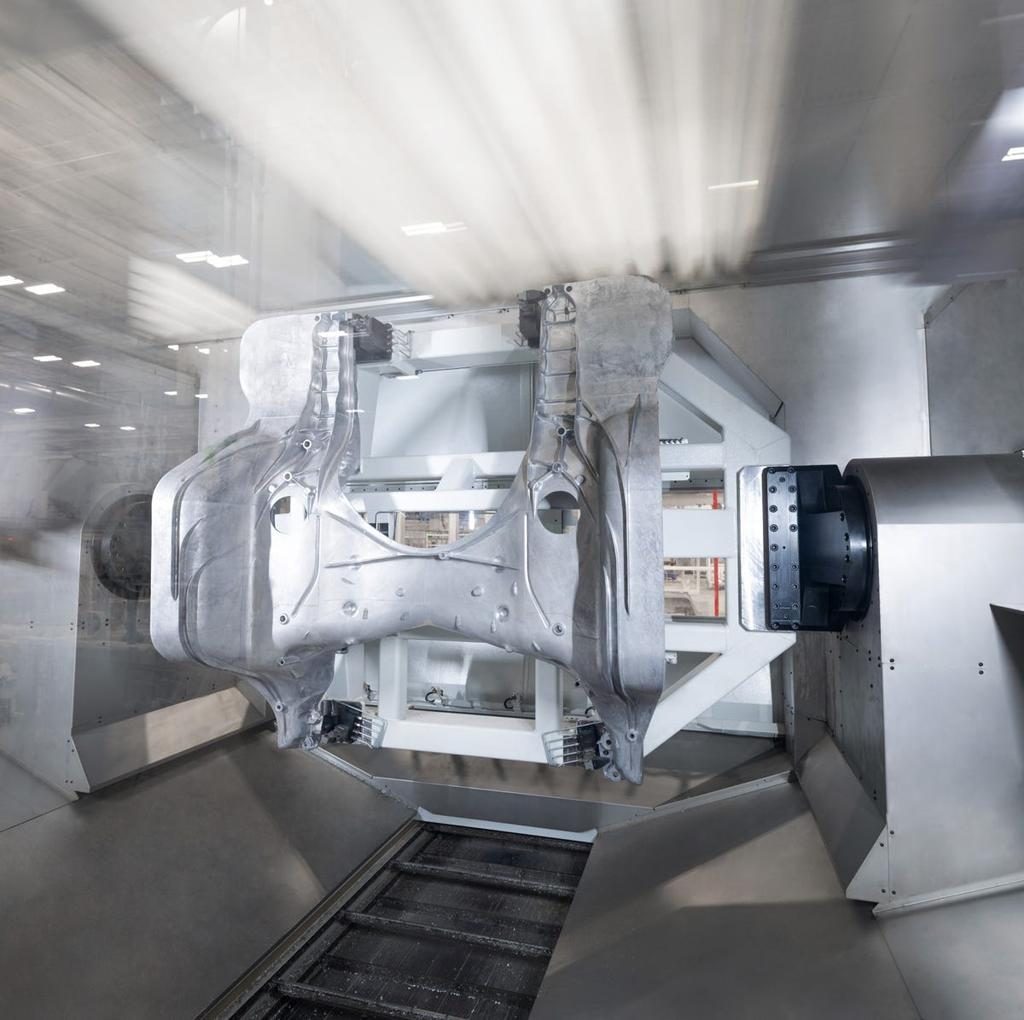
Large aluminum castings can replace a collection of stamped and welded body components with one major part. Volvo Cars, for example, has described megacasting as a way to replace numerous stamped floor parts with a single aluminum casting, reducing manufacturing complexity and vehicle weight.
So yes, megacasting can reduce demand for certain sheet metal subassemblies.
Rear-floor structures, front underbody sections and other complicated welded assemblies are likely to face more competition from large castings as the technology becomes practical for more vehicle programs.
But that does not mean an entire vehicle will become one casting.
Large castings are well suited to certain structural areas, but vehicles still need closures, exterior panels, battery covers, reinforcement pieces, thermal shields, electronics covers, mounting brackets and many smaller components. Different vehicle models also require different production volumes, investment levels and repair strategies.
The practical conclusion is that sheet metal demand is becoming more selective.
There may be fewer opportunities for assemblies made from many ordinary stamped pieces. At the same time, there will be continued demand for components that need thin walls, accurate interfaces, flexible design changes, reliable sealing or lower tooling investment.
For precision fabricators, the market is moving away from “more pieces” and toward “more responsibility per piece.”
Where Precision Sheet Metal Suppliers Actually Fit
It is important to distinguish precision sheet metal fabrication from high-volume automotive stamping.
A vehicle manufacturer may use large transfer presses and dedicated tooling to produce hundreds of thousands of identical body panels. That is a different business from découpe au laser, CNC bending and welding small or medium production runs.
Precision sheet metal companies are more likely to become involved during prototype development, engineering validation, pre-production, specialist-vehicle manufacturing and the production of supporting components.
This can include battery covers, test enclosures, power-electronics covers, thermal shields, sensor brackets, structural reinforcements and low-volume assemblies. The same supplier may also support charging equipment, battery storage cabinets or production-line equipment connected with the electric-vehicle industry.
Speed matters in these projects.
Electric-vehicle designs are changing quickly, and a bracket or enclosure may go through several revisions before the final design is released. A supplier that can review the design, identify manufacturing risks and produce revised parts without waiting for new hard tooling can be especially useful during this stage.
Once production volume rises, some parts may move to stamping, extrusion or casting. Others may remain fabricated because their annual volume does not justify expensive tooling or because the design continues to change.
What EV Customers Will Expect from Fabricators

Electric-vehicle work is likely to place less emphasis on a supplier’s machine list and more emphasis on process control.
Customers will want to know how weld distortion is managed, how sealing surfaces are inspected and how cosmetic aluminum is protected during production. They may require material traceability, dimensional reports, coating records, cleanliness controls or leak testing.
Engineering communication also becomes more important.
A hole located too close to a bend may cause distortion. A large welded cover may not remain as flat as the drawing suggests. Powder coating may build up on a gasket surface. Joining aluminum and steel without considering isolation may create long-term corrosion concerns.
A reliable supplier should identify these issues before production rather than simply manufacturing the drawing as received.
This is where precision fabrication creates value. The customer is not only buying a metal part. The customer is buying confidence that the part will seal, assemble and perform as expected.
The Dependence Is Real, but It Is Changing
Electric vehicles remain highly dependent on metal structures and fabricated components. The dependence is simply different from that of a combustion-engine vehicle.
Some traditional components have disappeared. Certain welded body assemblies will be replaced by large castings. Simple brackets will continue to face heavy price competition.
At the same time, battery protection, lightweight body design, electromagnetic shielding, thermal management and high-voltage packaging are increasing the performance expected from many metal components.
For precision sheet metal companies, this is both an opportunity and a warning.
The opportunity belongs to suppliers that can process aluminum and high-strength steel, manage distortion, understand sealing and surface requirements, and support frequent engineering changes.
Companies competing only on the price of laser cutting and bending may find the automotive market increasingly difficult. Companies that combine fabrication with engineering review, inspection and assembly support are more likely to find a lasting place in the electric-vehicle supply chain.
Electric vehicles may eventually use fewer individual metal parts in some areas. But the parts that remain will have to do more.
CONTACT US : mia@hofengfab.com