




Sheet Metal Fabrication Services: Key Processes & Tips
When developing a metal part, the manufacturing process is not only about cutting a piece of material into shape. Every step, from material selection to final inspection, can affect the performance, appearance, and assembly quality of the finished part.
Different projects require different combinations of manufacturing operations. A simple bracket may only need cutting and bending, while a complex enclosure or chassis may require multiple processes including forming, welding, hardware installation, coating, and assembly.
What Are the Common Processes Used in Metal Manufacturing?
Common manufacturing operations include cutting, bending, forming, stamping, welding, hardware insertion, deburring, surface finishing, inspection, and assembly.
The actual production route depends on the part design, material requirements, dimensional tolerances, surface requirements, and final application. For example, an electrical enclosure may require laser cutting, bending, welding, powder coating, and assembly to achieve the required protection and durability.
In professional sheet metal fabrication projects, manufacturers usually review the complete production process before starting manufacturing to avoid issues during later stages.
Cutting Methods for Sheet Metal Parts
Cutting is usually the first step in manufacturing sheet metal components. Common cutting methods include laser cutting, plasma cutting, punching, shearing, sawing, and waterjet cutting.
The selection of the cutting method depends on factors such as:
- Material type and thickness
- Part geometry and edge requirements
- Hole size and tolerance
- Production quantity
- Heat impact limitations
- Surface quality requirements
Laser cutting is widely used for parts requiring precise profiles, slots, openings, and complex contours. It provides high accuracy and is suitable for many applications including brackets, panels, covers, and custom enclosures.
However, cutting decisions also influence later processes. Features such as holes close to bend lines, narrow slots, burr direction, and heat-affected edges should be reviewed before production.
How Bending and Forming Shape Metal Components
Bending transforms flat metal sheets into functional three-dimensional structures such as brackets, panels, channels, cabinets, and covers.
Important bending factors include:
- Bend radius
- Bend angle
- Flange length
- Material grain direction
- Springback
- Distance between holes and bend lines
Forming and stamping processes can create additional features such as ribs, louvers, countersinks, embossing areas, and mounting tabs.
During design review, manufacturers need to consider possible issues including cracking, material thinning, deformation, and tooling requirements. Proper design consideration helps improve manufacturability and reduce unnecessary adjustments.
When Are Welding and Hardware Installation Required?
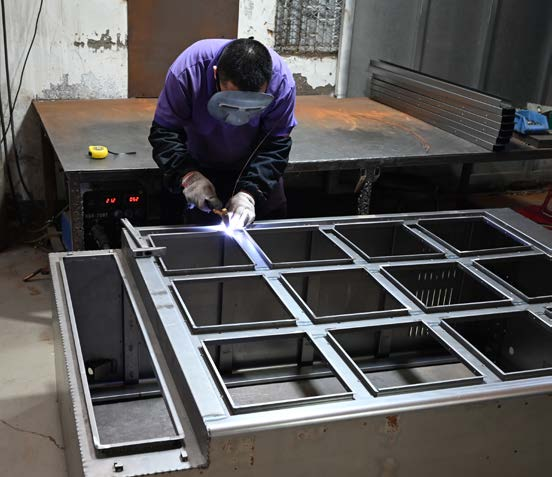
For larger structures or multi-part assemblies, welding and mechanical joining are commonly used to combine individual components.
Typical applications include:
- Metal frames
- Electrical cabinets
- Protective covers
- Equipment housings
- Mounting structures
Depending on the application, manufacturers may use welding, rivets, screws, adhesives, or mechanical fasteners.
Hardware installation is also an important part of many projects. Components such as PEM nuts, threaded inserts, studs, hinges, and standoffs can be added to improve assembly efficiency.
Before production, customers should clearly define hardware specifications, hole preparation requirements, torque requirements, and inspection standards.
Why Are Surface Treatments and Inspection Important?
Surface finishing improves both appearance and functional performance. Common treatments include powder coating, painting, plating, anodizing, polishing, brushing, and passivation.
For industrial applications, surface treatment may provide:
- Corrosion resistance
- Better appearance
- Improved durability
- Protection against environmental conditions
Before finishing, important details such as coating thickness, masking areas, grounding points, threaded holes, and final dimensions should be confirmed.
Quality inspection is another essential stage. Depending on the application, inspection methods may include dimensional inspection, first article inspection, CMM measurement, coating thickness testing, welding inspection, and assembly verification.
A reliable manufacturer should match inspection methods with the actual function of the part. For example, an enclosure may require flatness, coating, hardware fit, and appearance checks, while a structural frame may require welding and alignment verification.
Design Factors That Affect Manufacturing Results
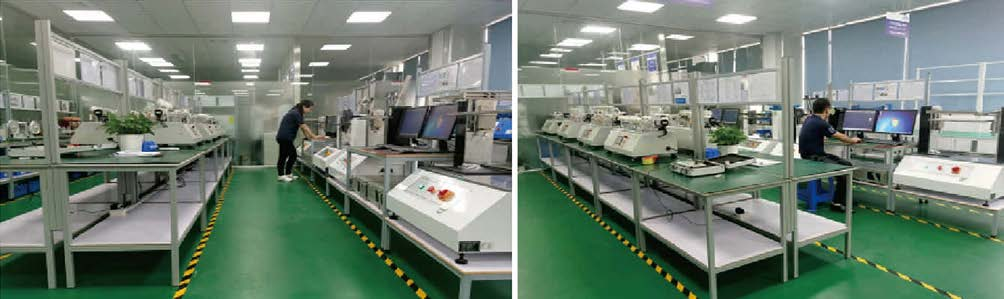
Good design plays an important role in controlling production cost and quality.
Key design considerations include:
- Material grade
- Sheet thickness
- Bend radius
- Minimum flange length
- Hole-to-bend distance
- Welding access
- Hardware clearance
- Coating thickness
- Assembly tolerance
Sheet metal parts should not be treated like machined blocks. Unlike machining processes, metal fabrication involves multiple stages, and each stage can influence the final dimensions.
Providing complete drawings, 3D models, material specifications, and tolerance requirements allows manufacturers to select the most suitable production method.
What Information Should Be Provided for a Manufacturing Quote?
To receive an accurate quotation, customers should provide:
- 2D drawings
- 3D CAD files (if available)
- Material type
- Sheet thickness
- Quantity requirements
- Critical dimensions
- Bend specifications
- Welding requirements
- Hardware list
- Surface treatment details
- Inspection standards
Clear project information helps manufacturers plan the correct manufacturing sequence, from cutting and forming to finishing and final inspection.
Choosing an experienced supplier for sheet metal fabrication can help ensure that every production stage is properly controlled, resulting in reliable parts that meet design requirements and perform as expected.
New Release: Custom Sheet Metal Enclosure
Introducing our latest sheet metal enclosure, manufactured through laser cutting, bending, welding, and finishing processes.
This new product showcases our fabrication capabilities and provides reliable solutions for industrial and electrical applications.


Contact us : mia@hofengfab.com