




Coastal environments pose a hidden threat to electrical equipment—salt-laden air can start corroding enclosures well before any visible rust appears.
A generator enclosure, electrical cabinet, junction box or control box may be exposed to humid air every day. Salt particles settle on the surface, moisture stays around joints and folded edges, and repeated wet-and-dry cycles gradually increase the risk of corrosion.
That is why 316L stainless steel enclosures are often considered for marine, coastal and other high-corrosion applications.
But from a manufacturing point of view, simply changing the material from 304 to 316L is not enough — the welding, surface finish, sealing, and drainage design all matter too.
The enclosure structure, welding, surface finishing, sealing and even the way water runs off the top can all affect the final result.

Why 316L Stainless Steel for Salt-Air Enclosures?
316L stainless steel is commonly selected where chloride exposure is a concern. Compared with 304 stainless steel, 316L has molybdenum in its composition, which gives it better resistance to chloride-related pitting and crevice corrosion.
This makes it a practical choice for equipment installed around:
- Coastal power facilities
- Équipement maritime
- Generators
- Wastewater treatment systems
- Outdoor control equipment
- Port and dockside installations
- Solar and renewable energy equipment
- Chemical and industrial facilities
But we don't normally recommend choosing 316L just because the customer says “outdoor.”
A stainless steel enclosure installed under a roof in an inland factory and one installed next to a marine generator are two very different applications.
Salt spray, humidity, direct rain, cleaning chemicals and the frequency of wet-dry cycles all need to be considered.
Also, 316L is corrosion resistant, not corrosion-proof. Surface contamination, poor weld treatment, trapped salt deposits and badly designed crevices can still create problems.
The Enclosure Design Matters as Much as the Stainless Steel
When we receive an outdoor enclosure project, we don't look only at the material grade.
The structure itself matters.
For example, a large flat top is more likely to collect rainwater, dust and salt deposits than a properly designed sloped surface.
This is why some of our stainless steel electrical enclosures are manufactured with a rain hat ou sloped top.
Rain Hat
A rain hat gives the top and door area an additional layer of protection from direct rain.
It is especially useful when the cabinet is installed outdoors without a large shelter above it.
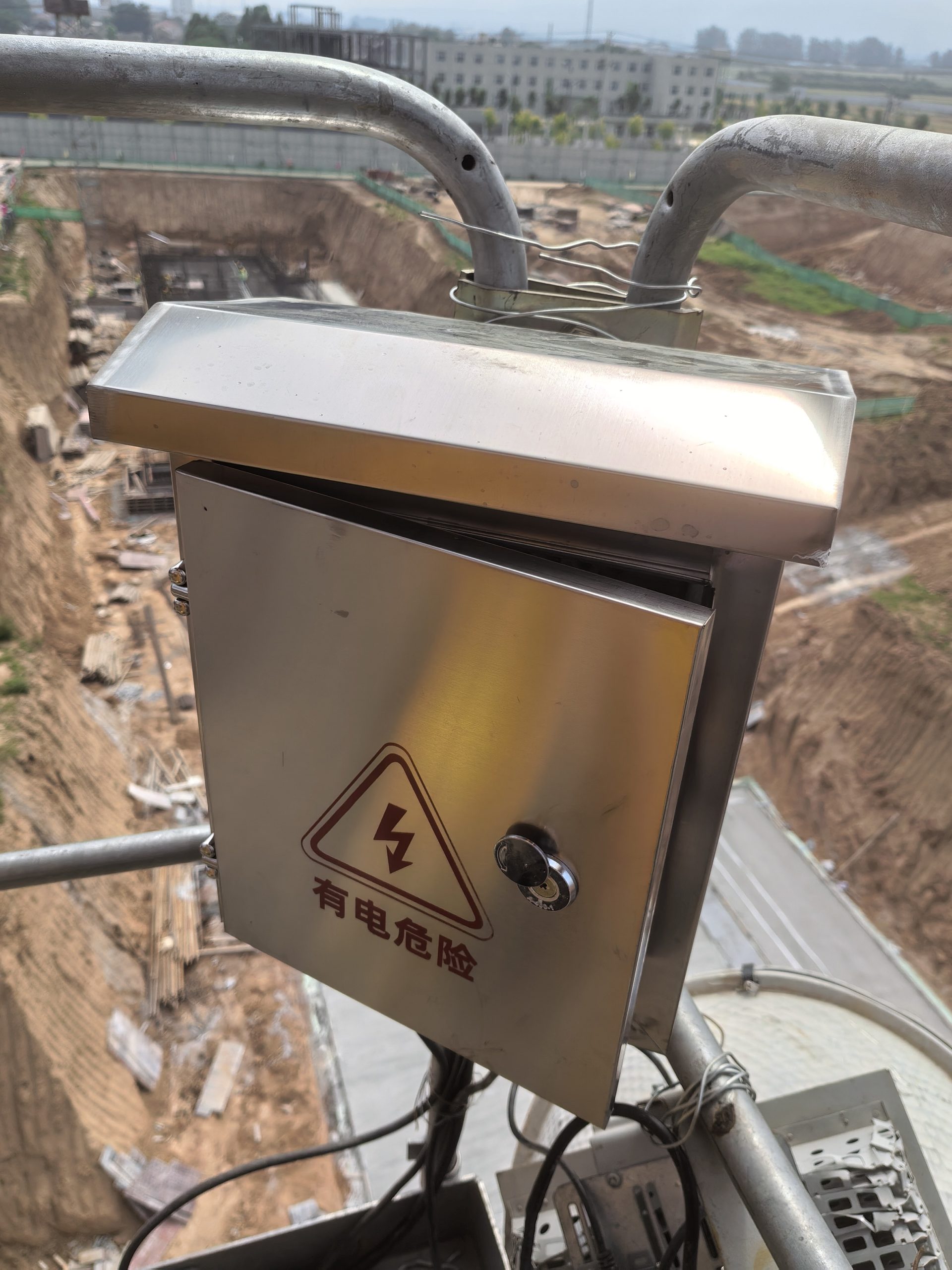

Sloped Top
A sloped top is a simple idea, but it makes practical sense.
Instead of allowing water to remain on a horizontal surface, the slope gives it a natural path to run away.
For outdoor electrical cabinets, small structural details like this can make daily maintenance easier.


Where Outdoor Stainless Steel Enclosures Usually Go Wrong
A lot of enclosure problems don't start with the stainless steel sheet itself.
They start at the joints.
Think about a welded corner, a folded edge, a door frame, a mounting bracket or a cable entry. These areas can become places where water, dirt and salt remain for a long time.
That is why we pay attention to the way the panels are cut, bent and joined instead of treating the enclosure as simply “a stainless steel box.”
For an IP66 or NEMA 4X project, the gasket, door structure, cable entries and joints also have to work together. NEMA 4X is not simply another name for 316L; it is a protection classification, while the stainless steel grade is a material specification.

Our Approach to Manufacturing Armoires électriques en acier inoxydable for Optimal Corrosion Protection
For a custom enclosure, the manufacturing process starts long before welding.
At HOFENG, a typical sheet metal enclosure goes through:
Drawing review → Laser cutting → CNC bending → Welding → Grinding → Surface finishing → Assembly → Inspection
Each step affects the next one.
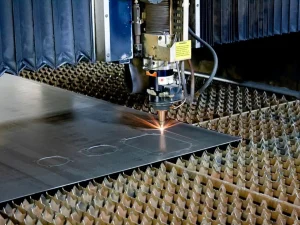
1. Laser Cutting
Laser cutting is usually the first major fabrication process.
This sounds straightforward, but there are several details that affect the final part.
The piercing position, cutting clearance and nesting layout all need to be considered.
A piercing point placed too close to a finished corner can concentrate heat in a small area and affect the edge.
The spacing between parts also cannot simply be made as small as possible. Too little clearance can make parts difficult to separate and may increase the risk of heat-related deformation. Too much spacing wastes sheet material.
Nesting is another part of the job.
Large enclosure panels can leave awkward areas of unused sheet. Small brackets, mounting plates and other parts can sometimes be arranged in these areas to improve material utilization.
This is one of those things that doesn't look particularly impressive in a finished product photo, but it matters every day on the shop floor.
2. CNC Sheet Metal Bending
After laser cutting, the flat parts are formed into the actual enclosure structure.
Bending accuracy affects the final dimensions, door alignment, corner fit and mounting positions.
This is especially important for custom electrical cabinets because a few small bending errors can accumulate when several panels are assembled together.
The bend sequence also needs to be considered before production.
For a simple panel, this may not be complicated. For a cabinet with several folds, mounting flanges and internal structures, the order of bending can determine whether the part can actually be formed correctly.

3. Stainless Steel Welding
Welding is one of the areas where stainless steel fabrication differs noticeably from ordinary carbon-steel sheet metal work.
Before welding, the surfaces need to be clean.
After welding, the weld area normally needs further grinding and surface treatment, especially when the enclosure will have a visible brushed finish.
Heat discoloration around a weld is not just an appearance issue. For corrosion-sensitive applications, weld treatment and surface cleanliness deserve attention.
We also avoid treating stainless steel with the same grinding tools used for ordinary carbon steel. Cross-contamination from iron particles can leave unwanted contamination on the stainless surface.

4. Grinding and Brushed Finish
If the customer wants a clean brushed stainless steel enclosure, the surface cannot simply be “brushed” at the very end.
The grinding condition underneath affects the final appearance.
Deep grinding marks, rough weld areas and uneven transitions are difficult to hide with a fine brushed finish.
For visible stainless steel cabinets, we normally pay attention to the transition between the welded area and the surrounding sheet.
The final brushed direction should also be consistent.
This is particularly noticeable on large cabinet doors and side panels because uneven brushing becomes much easier to see under strong light.

NEMA 4X and IP66: Don't Just Put the Rating on the Drawing
We often see RFQs asking for: 316L stainless steel + NEMA 4X + IP66
These three terms are useful, but they describe different things.
316L tells us about the material.
IP66 describes the enclosure's protection against dust and powerful water jets under the relevant test conditions.
NEMA 4X is a NEMA enclosure type that includes protection against water and an additional level of corrosion protection.
For a custom enclosure, the rating has to be considered together with the actual construction.
The door gasket, door overlap, hinges, locks, cable entries and other openings all become part of the enclosure protection system.
So when a customer asks us for an IP66 enclosure, we don't only change the material specification in the quotation.
We need to know what the actual enclosure really use in reality along with the 3D drawings .
Why We Need Your STEP 3D Drawing
This is probably the most practical part of a custom enclosure project.
Sometimes we receive an inquiry like this: 316L stainless steel, IP66, Outdoor, 600 × 500 × 250 mm ,Quantity: 20 pcs
It sounds like enough information at first.
But it isn't enough for us to manufacture the actual enclosure.
Where are the cable entry holes?
Does it have a mounting plate?
How thick should the plate be?
Where are the hinges and locks?
Is there a rain hat?
Is the top flat or sloped?
How does the door close?
Where does the gasket sit?
Are there internal brackets?
What are the required tolerances?
These details can change the manufacturing process and the final quotation.
A 2D drawing with dimensions is also useful, especially for manufacturing details, tolerances and surface requirements.

Custom 304 / 316L Stainless Steel Enclosures
Not every stainless steel enclosure needs to be 316L.
For many general industrial and outdoor applications, 304 stainless steel can be a practical choice.
For stronger chloride exposure or marine salt-air environments, 316L stainless steel is often the better starting point.
The correct choice depends on the actual installation environment rather than simply choosing the more expensive material.
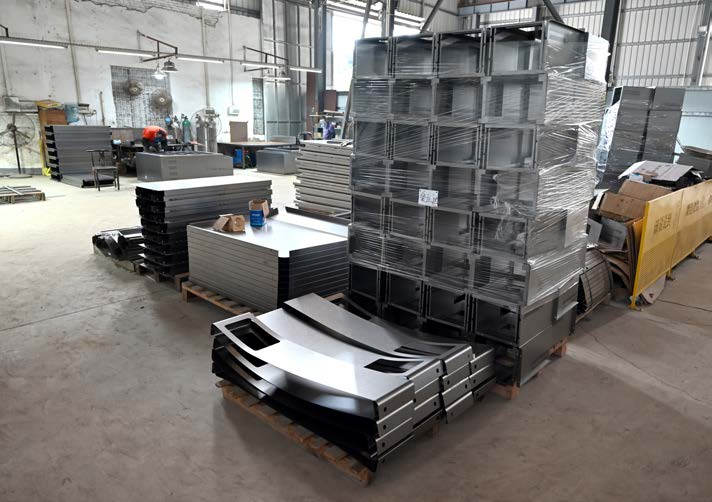
À HOFENG, we can manufacture different types of stainless steel enclosures according to the application and drawing.


Built Around Your Actual Application
A good electrical enclosure is not just a piece of stainless steel folded into a box.
The material has to match the environment.
The structure has to match the equipment.
The sealing has to match the protection requirement.
And the manufacturing process has to match the drawing.
That's how we approach custom enclosure projects at HOFENG.
From laser cutting and CNC bending to welding, grinding and final inspection, we manufacture the enclosure according to the customer's actual design and requirements.
Whether you need 316L stainless steel enclosures, NEMA 4X IP66 enclosures, stainless steel junction boxes, ou a fully customized electrical cabinet, simply let us know your specifications—our experts will review your needs and recommend the most suitable solution.
CONTACT US: mia@hofengfab.com
OUR VIDEO: https://www.youtube.com/@Hofengfab