
Introduction
Sheet metal fabrication is one of the most widely used manufacturing methods for producing durable and precise metal components. From electrical enclosures and battery cabinets to EV charging stations and industrial equipment, fabricated sheet metal parts are found in nearly every industry.
Modern sheet metal fabrication combines advanced CNC machinery with skilled manufacturing processes to produce custom parts with high accuracy, consistent quality, and cost-effective production. Whether you need a single prototype or high-volume production, choosing the right fabrication process is essential for product performance and long-term reliability.
In this guide, we'll explain what sheet metal fabrication is, how it works, the most common materials and processes, and why it's a preferred manufacturing solution for many industries.
Key Takeaways
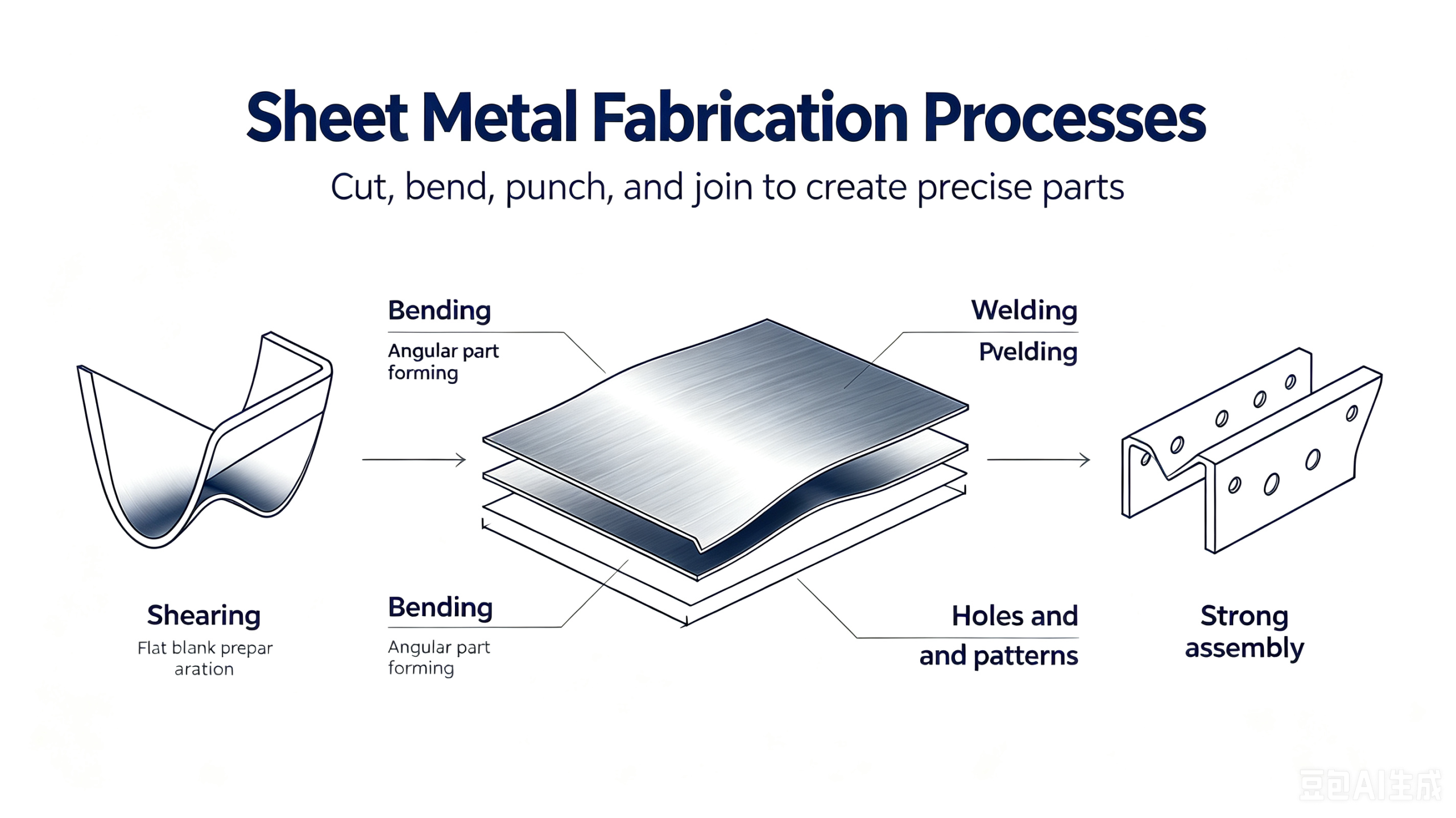
- Sheet metal fabrication transforms flat metal sheets into finished parts through cutting, bending, welding, and finishing.
- Common materials include stainless steel, aluminum, carbon steel, and galvanized steel.
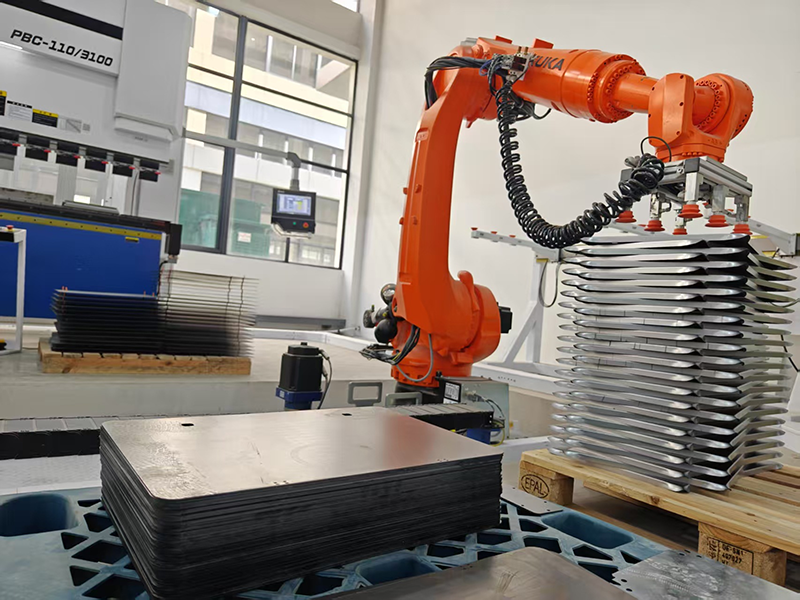
- CNC-controlled equipment ensures high precision and repeatable quality.
- Sheet metal fabrication is ideal for electrical enclosures, battery cabinets, EV charging equipment, industrial machinery, and many other applications.
- Working with an experienced manufacturer helps reduce production costs while maintaining product quality.
What Is Sheet Metal Fabrication?
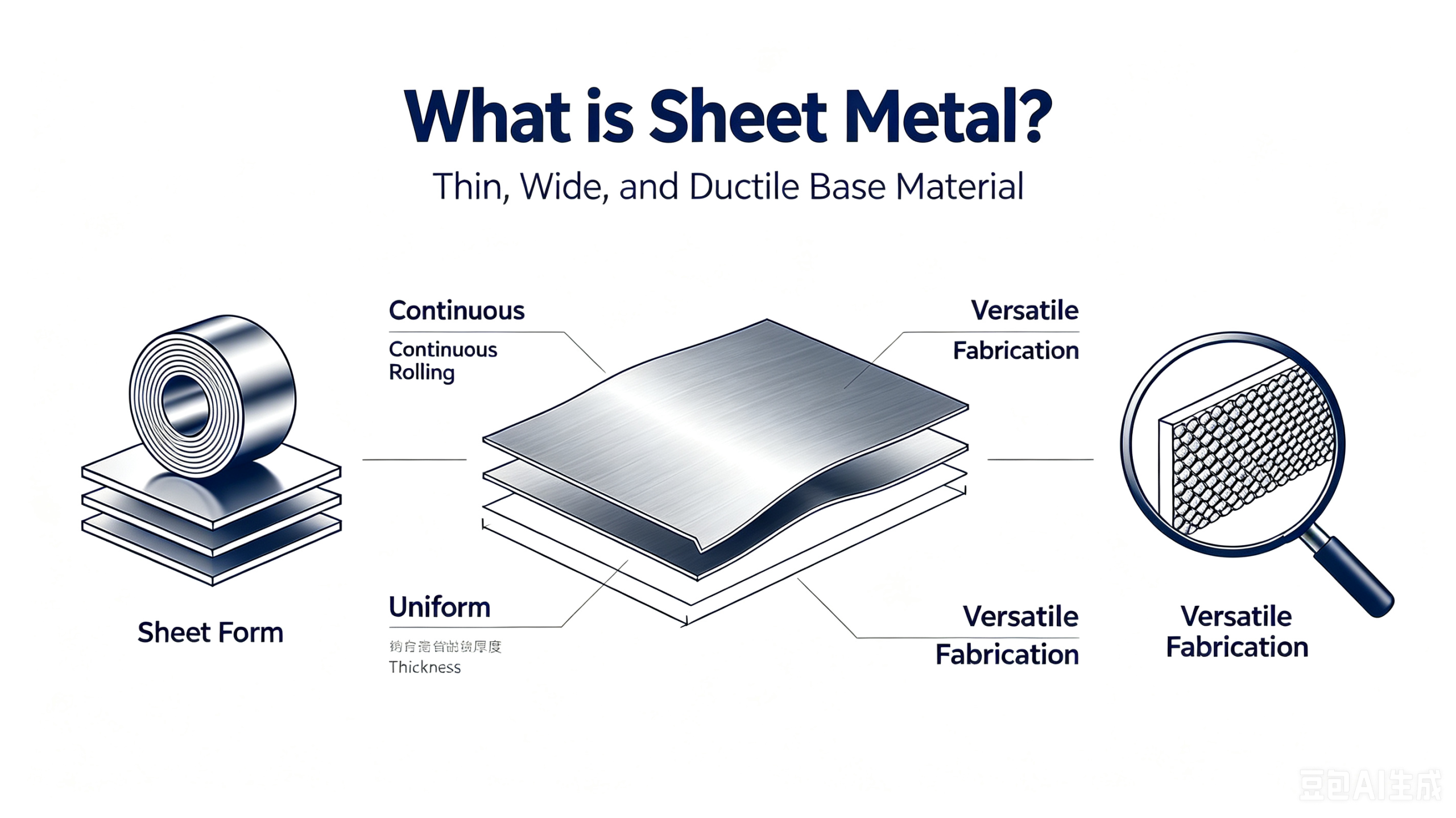
Sheet metal fabrication is the process of converting flat metal sheets into custom parts, assemblies, or enclosures using a combination of manufacturing techniques.
Unlike casting or machining from solid blocks, fabrication reshapes sheet materials into finished products with minimal waste, making it an efficient solution for both low-volume and mass production.
Depending on the product design, fabrication may involve several manufacturing steps before the final component is assembled and inspected.

-
Common Sheet Metal Fabrication Processes
Лазерная резка
Laser cutting uses a high-powered laser beam to produce clean, accurate cuts with minimal material waste.
It is suitable for:
- Complex geometries
- High-precision components
- Thin to medium-thickness metal sheets
- Prototype and production parts
Laser cutting offers excellent edge quality and reduces the need for secondary machining.
CNC Bending
After cutting, metal sheets are formed using CNC press brakes to create precise angles and shapes.
Modern CNC bending provides:
- Excellent dimensional accuracy
- Consistent repeatability
- Reduced production errors
- Efficient manufacturing for custom designs
Proper bend design also improves structural strength without increasing material thickness.
Сварка
Many fabricated products require multiple components to be permanently joined.
Common welding methods include:
- TIG Welding
- MIG Welding
- Spot Welding
Professional welding ensures structural integrity while maintaining an attractive appearance.
Punching
Punching is used to create holes, slots, ventilation openings, and mounting features quickly and efficiently.
Compared with laser cutting, punching can be more economical for high-volume production of repeated features.
Surface Finishing
Surface finishing improves both appearance and durability.
Popular finishing options include:
- Порошковое покрытие
- Brushed Finish
- Sandblasting
- Anodizing (Aluminum)
- Гальваника
The appropriate finish depends on the product's operating environment and corrosion resistance requirements.
Common Materials Used in Sheet Metal Fabrication
Нержавеющая сталь
Stainless steel offers excellent corrosion resistance, strength, and durability, making it ideal for outdoor equipment, food processing, medical devices, and electrical enclosures.
Алюминий
Aluminum is lightweight, corrosion-resistant, and easy to fabricate.
It is commonly used for:
- Electronic enclosures
- EV charging equipment
- Battery systems
- Aerospace components
Its excellent strength-to-weight ratio makes it suitable for applications where weight reduction is important.
Carbon Steel
Carbon steel provides high strength at a relatively low cost.
It is widely used for:
- Industrial machinery
- Каркасы оборудования
- Structural components
- Manufacturing equipment
Surface treatments are often applied to improve corrosion resistance.
Galvanized Steel
Galvanized steel features a protective zinc coating that helps prevent rust.
It is commonly selected for:
- Outdoor cabinets
- Electrical control boxes
- HVAC equipment
- Construction applications
Benefits of Custom Sheet Metal Fabrication
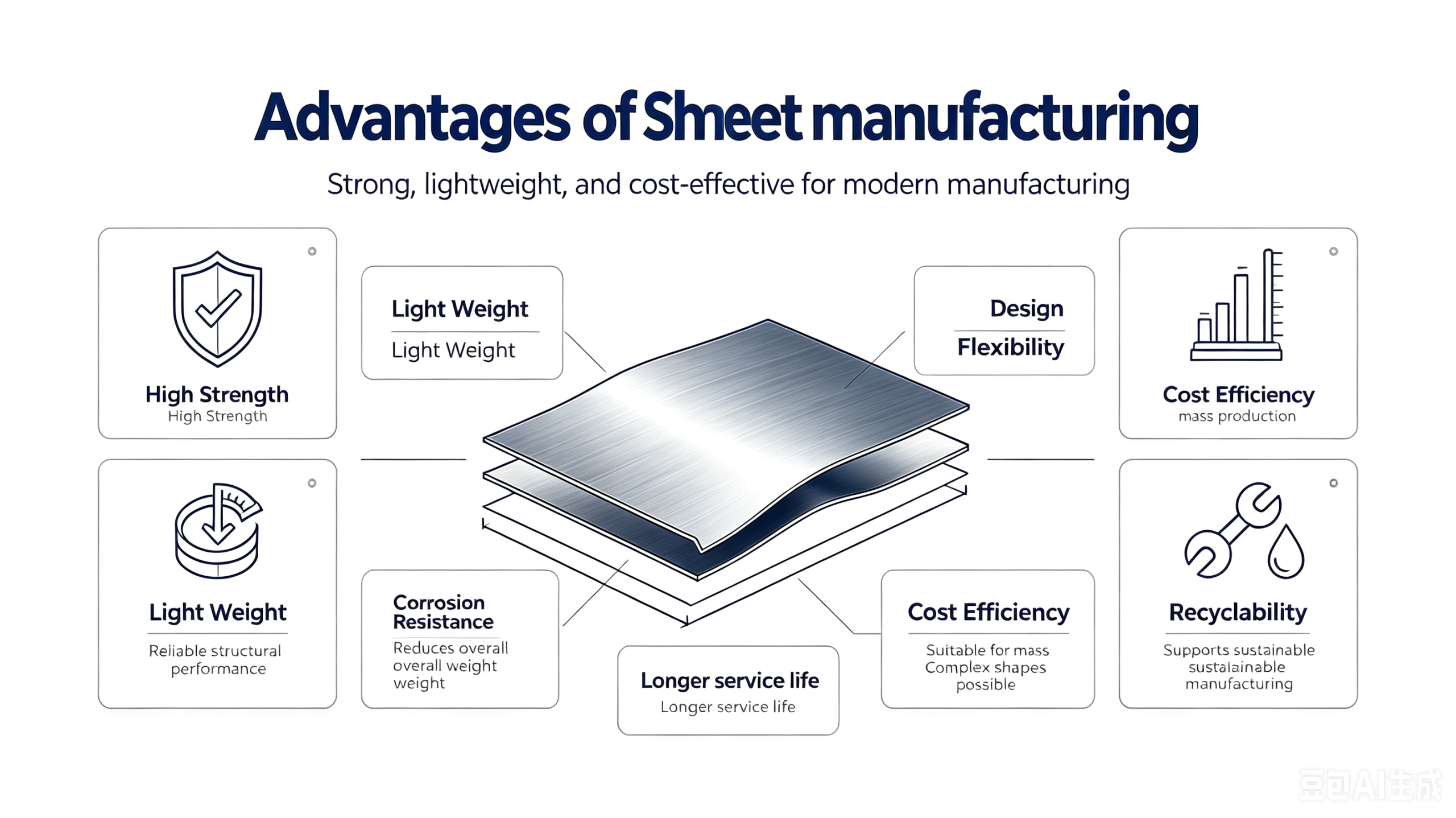
Choosing custom sheet metal fabrication offers several advantages.
High Precision
CNC-controlled manufacturing ensures consistent dimensions and repeatable quality across production batches.
Design Flexibility
Custom fabrication supports various sizes, shapes, hole patterns, and mounting configurations to meet unique project requirements.
Cost Efficiency
Compared with machining solid metal blocks, sheet metal fabrication uses materials more efficiently and reduces manufacturing costs.
Fast Production
Digital manufacturing processes enable rapid prototyping and shorter production lead times.
Excellent Durability
With the right material and surface finish, fabricated parts can perform reliably in demanding indoor and outdoor environments.
Industries That Use Sheet Metal Fabrication
Sheet metal fabrication supports a wide range of industries, including:
- Electrical Enclosures
- Energy Storage Systems
- EV Charging Infrastructure
- Telecommunications Equipment
- Промышленная автоматизация
- Renewable Energy
- Medical Equipment
- Transportation
- Строительство
- Agricultural Machinery
Its versatility makes it one of the most important manufacturing processes across modern industries.
Why Choose Хофэн for Sheet Metal Fabrication?
В Хофэн, we provide comprehensive sheet metal fabrication services for customers worldwide.
Our capabilities include:
- Precision laser cutting
- CNC bending
- Welding and assembly
- Powder coating and surface finishing
- Prototype development
- Low- and high-volume production
- Custom electrical enclosures and industrial metal cabinets
From concept to finished product, we focus on delivering reliable quality, competitive pricing, and consistent manufacturing performance for every project.
-

-
Заключение
Sheet metal fabrication is a versatile and cost-effective manufacturing process that produces durable, high-quality metal components for countless industries.
By combining advanced equipment, quality materials, and experienced manufacturing capabilities, businesses can obtain custom fabricated parts that meet demanding performance and reliability requirements.
Whether you're developing a prototype or scaling to mass production, selecting the right fabrication partner is key to achieving consistent quality and long-term value.
Часто задаваемые вопросы
What is sheet metal fabrication?
Sheet metal fabrication is the manufacturing process of cutting, bending, welding, and assembling flat metal sheets into finished products or components.
What materials are commonly used in sheet metal fabrication?
The most common materials include stainless steel, aluminum, carbon steel, and galvanized steel.
Is sheet metal fabrication suitable for custom products?
Yes. Custom sheet metal fabrication is ideal for producing parts with specific dimensions, hole patterns, bends, and surface finishes.
What industries use sheet metal fabrication?
Industries such as electrical equipment, energy storage, EV charging, telecommunications, industrial automation, medical devices, and construction all rely on sheet metal fabrication.
How do I choose the right sheet metal fabrication manufacturer?
Look for a manufacturer with advanced CNC equipment, comprehensive fabrication capabilities, strict quality control, flexible production capacity, and experience serving your industry.
Author: Alex Lee
Contact us:
Электронная почта: mia@hofengfab.com
WhatsApp: +86 185-6568-5940
Real project insights from Shenzhen Hofengfab, June 2026.