

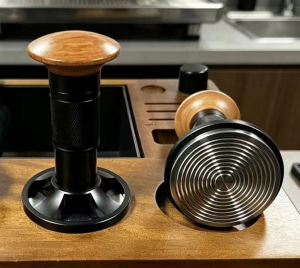
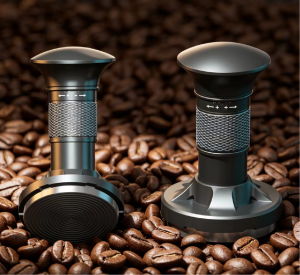
A coffee tamper is a tool used to compress ground coffee inside an espresso portafilter basket before extraction.
It looks simple—a handle connected to a flat or shaped metal base—but its job is more important than its appearance suggests. A properly selected coffee tamper helps create a level, compact coffee bed so that pressurized water can move through the grounds as evenly as possible.
For a home user, this can mean more repeatable espresso.
For a professional barista, it means better workflow and consistency across hundreds of shots.
For an espresso equipment brand or coffee tamper manufacturer, it becomes an engineering question involving diameter tolerance, base geometry, material selection, surface finish, ergonomics, weight, and CNC machining accuracy.
This guide explains what a coffee tamper does, how tamping affects espresso extraction, how to choose the correct size and base shape, and what matters when designing or sourcing a custom coffee tamper.
What Does a Coffee Tamper Do?
After espresso coffee is ground and distributed into the portafilter basket, the grounds are still relatively loose.
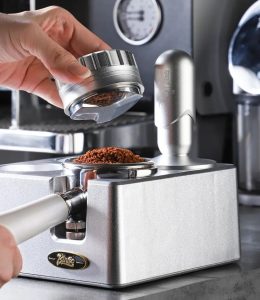
The tamper compresses those grounds into what is commonly called the coffee puck.
The main purpose is not simply to “press the coffee as hard as possible.” A good tamping process is intended to produce a coffee bed that is:
- level across the basket;
- evenly compacted;
- stable enough to remain in position during brewing;
- consistent from one shot to the next.
During espresso extraction, water is pushed through the coffee puck under pressure. The coffee bed therefore becomes part of the hydraulic resistance of the brewing system.
If one area of the puck is less dense than another, water may preferentially move through the easier path. This uneven flow is commonly associated with channeling and inconsistent extraction.
That is why tamping should be viewed as part of the complete puck-preparation process rather than as an isolated action.
Grinding, dosing, distribution and tamping all work together.
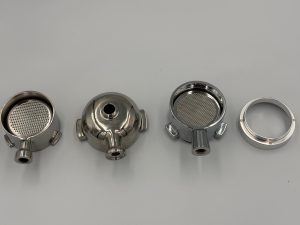
Why Is Tamping Important for Espresso?
A coffee tamper mainly performs three practical functions.
1. It Compresses Loose Coffee Grounds
Freshly ground coffee contains many irregular gaps between individual particles.
Applying downward force reduces some of that free space and creates a more stable coffee bed.
The objective is repeatability.
Once the grounds are adequately compressed, applying substantially more force does not necessarily produce a proportionally better espresso. Experimental training material has shown that the difference in puck compression between a comfortable tamp and a very heavy tamp can be relatively small once the coffee bed has already compacted.
This is one reason professional baristas focus strongly on a level and repeatable tamp, rather than simply maximizing pressure.
2. It Creates a Level Surface
Levelness is one of the most important parts of tamping.
If the tamper enters the basket at an angle, one side of the coffee puck may become deeper or denser than the other.
That creates an uneven physical structure before extraction even begins.
In professional barista competition guidance, consistent dosing, even distribution and level tamping are specifically emphasized as part of good espresso preparation.
A well-designed espresso tamper should therefore help the user naturally apply force perpendicular to the basket.
3. It Improves Shot-to-Shot Consistency
In a busy café, consistency is often more valuable than theoretical perfection.
A barista may tamp hundreds of times per day.
If the tamper is uncomfortable, poorly balanced or incorrectly sized, small inconsistencies can accumulate throughout the shift.
This is why handle geometry, base diameter, total weight and grip comfort are not simply cosmetic details.
They affect how the tool is actually used.
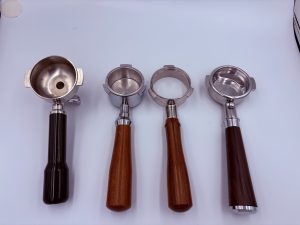
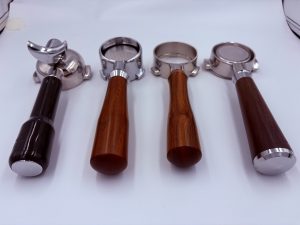
Coffee Tamping Is Only One Part of Puck Preparation
It is easy to blame the tamper when an espresso shot runs too fast, too slowly or unevenly.
In practice, tamping is only one variable.
You should consider at least:
Dose + Grind Size + Distribution + Tamping + Basket Geometry + Brewing Parameters
For example, if espresso flows too quickly, pressing harder is not automatically the correct solution.
The grind may be too coarse.
The dose may be too low.
The coffee may have been distributed unevenly.
The basket may not match the tamper correctly.
A good barista changes one variable at a time and evaluates the result.
From an engineering perspective, this is simply process control: reduce unnecessary variables and make the repeatable variables as consistent as possible.
What Size Coffee Tamper Do I Need?
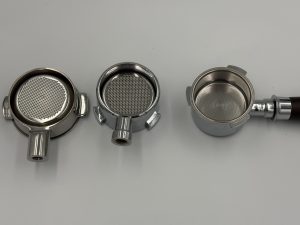
The correct coffee tamper size depends on the internal diameter and geometry of the espresso filter basket.
There is no single universal size.
Common nominal tamper sizes include:
49 mm, 51 mm, 53 mm, 53.3 mm, 54 mm, 57 mm, 58 mm, 58.3 mm, 58.4 mm and 58.5 mm.
Smaller sizes are often found on domestic espresso equipment, while commercial machines commonly use baskets in the approximately 58 mm category.
However, the number printed on a portafilter or machine specification should not always be treated as the exact required tamper diameter.
Why 58 mm and 58.5 mm Tampers Are Different
A nominal 58 mm espresso basket may accept a tamper larger than exactly 58.00 mm.
Precision tampers designed for compatible commercial baskets are often manufactured around 58.3–58.5 mm so that the base fits more closely to the basket wall.
Professional coffee training material notes that a snug fit helps reduce the amount of untamped coffee left around the perimeter, while the tamper must still have enough clearance to move freely without becoming stuck.
That small dimensional difference may look insignificant on paper.
From a CNC machining perspective, it is not.
A difference of 0.2 or 0.3 mm can noticeably change the fit between the tamper and the filter basket.
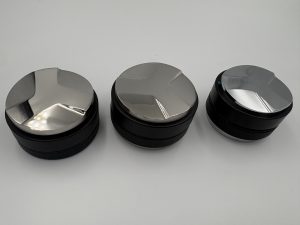
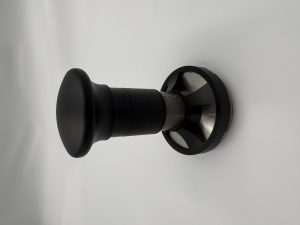
Why Tamper Manufacturing Tolerance Matters
This is where a precision CNC coffee tamper differs from a very inexpensive generic part.
Imagine a product labeled “58 mm.”
If its actual diameter is 57.6 mm, the radial clearance inside the basket may be significantly larger than expected.
That can leave a visible ring of less-compressed coffee near the basket wall.
On the other hand, if the tamper is made too large, it may drag against the tapered basket wall or even become difficult to remove.
For a CNC machined coffee tamper, manufacturers should control:
- base diameter;
- roundness;
- flatness;
- concentricity;
- edge geometry;
- surface finish;
- handle-to-base alignment.
These dimensions should be defined according to the intended basket rather than relying only on a generic “58 mm” label.
For OEM projects, we normally recommend confirming the target basket specification before finalizing the production drawing.
Common Coffee Tamper Base Shapes
Coffee tamper bases are available in several geometries.
The most common types include:
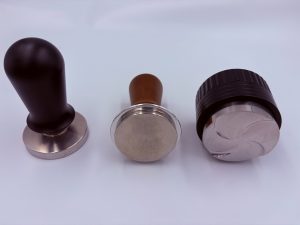
Flat
A flat coffee tamper has a level tamping surface.
It is the most widely used design and is generally the easiest geometry to manufacture, inspect and use consistently.
For many commercial and home espresso applications, a precision flat base is the most straightforward choice.
American Curve
An American Curve base has a shallow convex profile.
Compared with a flat base, the center extends slightly deeper into the coffee bed.
The curvature is usually relatively gentle.
Euro Curve
A Euro Curve design uses a more pronounced convex surface.
Historically, curved bases have been used with the idea of changing the shape of the compressed coffee bed.
Whether a curved base improves extraction depends heavily on basket geometry, distribution technique and workflow, so it should not automatically be considered “better” than a flat design.
C-Flat
A C-Flat base combines a substantially flat central area with a shaped or relieved perimeter.
The exact geometry may vary by manufacturer.
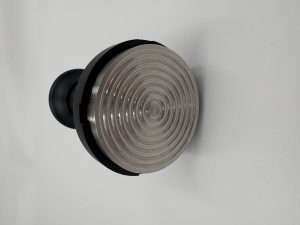
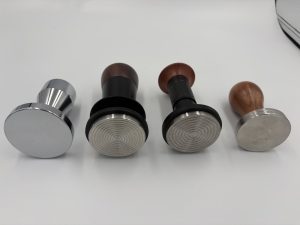
Ripple
A Ripple tamper uses concentric grooves or ridges on the bottom surface.
These grooves leave a pattern on the top of the coffee puck.
They create a distinctive appearance, but the geometry also makes the base more complex to machine and clean.
C-Ripple
A C-Ripple design combines ripple features in the central region with a flatter area toward the perimeter.
Again, dimensions vary between manufacturers.
From a production engineering perspective, terms such as “Ripple” or “C-Ripple” should never replace an actual drawing.
For a custom espresso tamper, the correct approach is to specify groove width, groove depth, radius, pitch and edge transition directly in the CAD model.
Is a Flat or Convex Coffee Tamper Better?
For most buyers, a precision flat tamper is the safest general-purpose option.
Its geometry is simple, easy to measure and easy for the user to understand.
More complex bases may provide a particular workflow preference or product identity, but the improvement cannot be separated from the rest of the espresso preparation process.
A high-quality flat tamper with the correct diameter will usually be more useful than an elaborate base with poor dimensional control.
This is an important distinction when comparing coffee tampers.
Geometry is visible.
Tolerance is often invisible.
But tolerance can be more important.
How Hard Should You Tamp Espresso?
There is no need to treat tamping as a strength competition.
Traditional barista training sometimes refers to values such as 20–30 lb of tamping force, and surveys have found this range commonly used by baristas.
However, the more useful principle is:
Apply enough pressure to fully and consistently compress the coffee bed, keep the tamper level, and use a repeatable technique.
Once the puck has stopped compressing significantly, additional force offers diminishing benefit.
This also matters ergonomically.
A barista making hundreds of drinks per day should not need to apply unnecessary force to every portafilter.
For commercial environments, consistency and ergonomics are major reasons that calibrated tampers, spring-loaded tampers and automatic tamping systems have become popular.
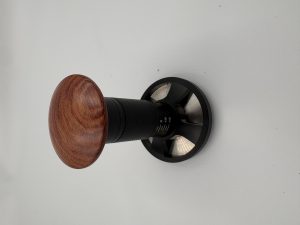
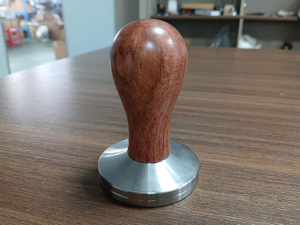
Coffee Tamper Handle Design Matters More Than It Looks
The ideal tamper handle is not necessarily the most decorative one.
It should fit the user's hand.
A comfortable handle allows the wrist and forearm to stay aligned while pressure is applied vertically.
Important handle variables include:
- handle diameter;
- overall height;
- contour;
- center of gravity;
- surface texture;
- material;
- total tamper weight.
A handle that is too narrow can concentrate pressure in the palm.
A handle that is too tall may feel unstable for some users.
A very heavy tamper can feel premium at first but may become tiring during repetitive commercial use.
There is no perfect handle shape for every barista.
That is why custom coffee tamper projects often benefit from prototype testing before mass production.
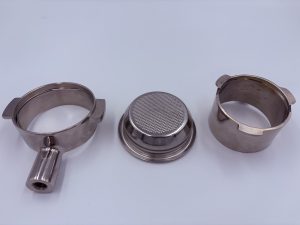
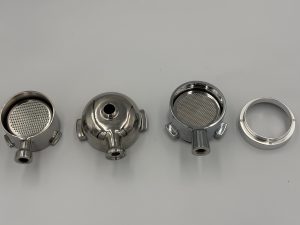
Stainless Steel Coffee Tamper
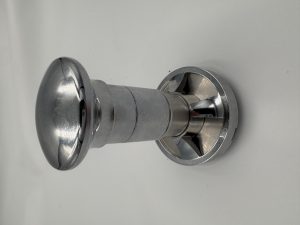
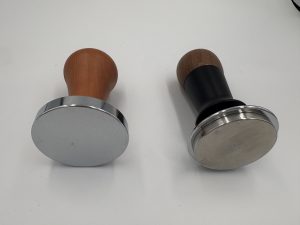
Stainless steel is one of the most common materials for tamper bases.
A stainless steel coffee tamper offers several advantages:
high density, good wear resistance, corrosion resistance, machinability and a premium feel.
Stainless steel also works well with polished, brushed or bead-blasted finishes.
For brands positioned toward professional cafés or premium home espresso users, stainless steel is often the natural choice.
The trade-off is weight and machining cost.
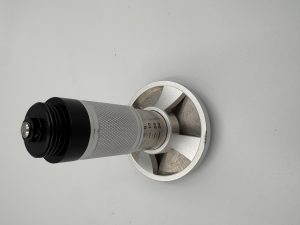
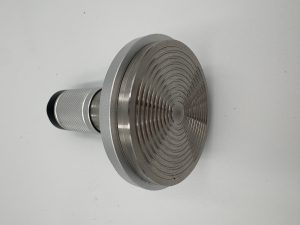
Aluminum Coffee Tamper
An aluminum coffee tamper is much lighter.
CNC-machined aluminum is suitable when low weight, color finishing or lower material mass is important.
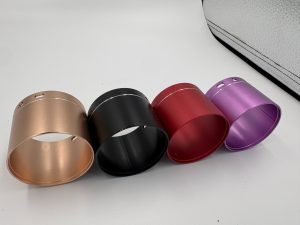
Aluminum handles can also be anodized in different colors, making the material attractive for branded product lines.
However, a bare aluminum tamping surface is softer than stainless steel and may show scratches or impact marks more easily.
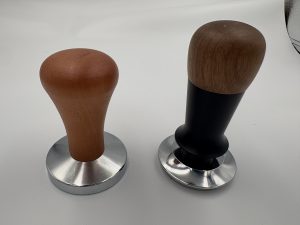
For this reason, some designs use an aluminum handle combined with a stainless steel base.
This hybrid construction offers a useful balance between low handle weight and a durable tamping surface.
Brass Coffee Tamper
A brass coffee tamper has a very different feel.
Brass is dense, relatively easy to machine and visually distinctive.
Its weight gives the tool a substantial hand feel, which some users prefer.
Depending on the finish, brass can also develop surface oxidation or patina over time.
For this reason, buyers should decide whether they want natural aging, polishing, plating or another protective treatment.
Brass is often used when product appearance and tactile character are part of the brand positioning.
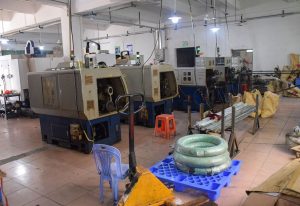
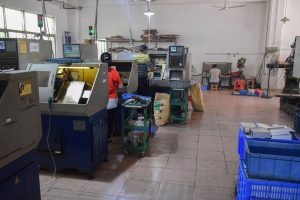
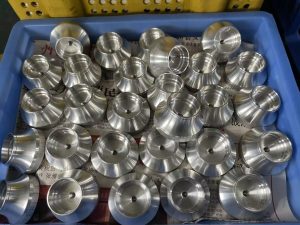
CNC Machined Coffee Tamper: What Does CNC Add?
The words “CNC machined” should mean more than a marketing label.
For a coffee tamper, CNC manufacturing can provide precise control over:
Diameter
A machining program can hold the critical base dimension much more consistently than a loosely controlled casting or basic turning process.
Flatness and geometry
The base surface can be machined according to a defined CAD profile.
Concentricity
The handle, threaded connection and tamping base can be kept on the same centerline.
Repeatability
Once the machining process has been validated, large batches can maintain more consistent dimensions.
Customization
Logos, grooves, textures, custom diameters, handle profiles and proprietary geometries can be incorporated into the manufacturing process.
This makes CNC production particularly useful for custom coffee tamper, OEM coffee tamper and private label coffee tamper programs.
Custom Coffee Tamper Options for Coffee Brands
For a coffee equipment brand, roaster, distributor or espresso machine company, a custom tamper can be developed at several different levels.
The simplest project may only involve putting a logo onto an existing model.
A fully customized project can include:
- custom base diameter;
- proprietary handle profile;
- stainless steel, aluminum or brass construction;
- custom weight;
- laser-engraved or CNC-machined logo;
- anodized aluminum colors;
- PVD or plated finishes;
- knurled grip surfaces;
- interchangeable bases;
- custom packaging;
- serialized products;
- private-label branding.
OEM Coffee Tamper Development Process
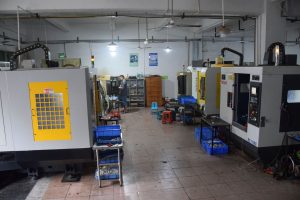
A professional coffee tamper manufacturer should be able to move from an idea to production using a controlled development process.
A typical OEM project may look like this:
1. Define the application
Confirm the intended espresso machine, filter basket size, customer market and target price range.
2. Select the material
Choose stainless steel, aluminum, brass or a combination of materials according to weight, appearance, cost and durability requirements.
3. Create the CAD design
Define critical dimensions and tolerances.
4. Produce a prototype
CNC machine a small quantity for fit and ergonomic testing.
5. Test with the actual basket
Do not rely only on nominal dimensions.
Test assembly, clearance and workflow using the real filter basket whenever possible.
6. Confirm surface finish
Approve polishing, brushing, anodizing, bead blasting, plating or other finishing processes.
7. Approve branding
Check laser marking, engraving, logo position and packaging artwork.
8. Begin mass production
Use dimensional inspection and production sampling to maintain consistency.
This approach reduces the risk of discovering compatibility problems after thousands of units have already been manufactured.
What Should a Coffee Tamper Supplier Control During Production?
When evaluating a coffee tamper supplier, buyers often focus primarily on unit price.
Price matters, but several production controls deserve equal attention.
Critical Dimensions
The supplier should understand which dimensions affect function.
For most tampers, base diameter is one of the most important.
Surface Finish
The bottom surface should be free from deep machining marks, burrs and damage that could interfere with cleaning or appearance.
Edge Treatment
Edges should be properly deburred without accidentally reducing the effective tamping diameter more than intended.
Handle Alignment
A premium tamper should not look or feel visibly eccentric.
Thread Fit
For multi-piece designs, threads must assemble securely and consistently.
Finish Consistency
Anodized, plated, polished or brushed components should maintain reasonable appearance consistency from batch to batch.
Inspection
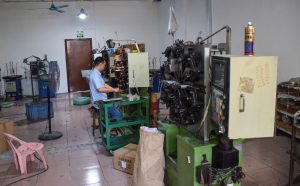
A capable manufacturer should be able to inspect dimensions using suitable measuring equipment rather than relying only on visual checks.
Cheap vs. Precision Coffee Tampers: What Is the Real Difference?
Two tampers can look nearly identical in a product photograph and still perform differently in the hand.
The biggest differences are often found in four areas:
Fit
A precision base is more closely matched to the basket.
Machining
Better control of diameter, flatness and concentricity improves consistency.
Ergonomics
A well-developed handle is more comfortable during repeated use.
Finishing
Better polishing, anodizing, engraving and edge treatment improve durability and perceived quality.
This does not mean an expensive tamper automatically makes better espresso.
Coffee quality, grinder performance, distribution technique and brewing parameters remain more important to the final cup.
A premium tamper mainly provides a better controlled interface between the barista and the coffee puck.
How to Choose a Coffee Tamper
When selecting a tamper, use the following order.
First, identify your filter basket.
Then determine the correct base diameter.
After that, choose the base geometry.
Finally, select the handle, material, weight and appearance that suit your workflow.
In practical terms:
Basket fit comes before aesthetics.
A beautiful tamper that does not fit the basket properly is still the wrong tool.
Coffee Tamper Size Guide
| Basket / Application | Common Tamper Range | Notes |
|---|---|---|
| Small domestic baskets | 49–51 mm | Verify actual basket dimensions |
| Common home espresso systems | 51–54 mm | Machine-specific fit is important |
| Larger domestic / prosumer systems | 53–54 mm | Precision sizes may vary |
| Commercial espresso baskets | Around 58 mm | 58.0, 58.3, 58.4 and 58.5 mm are all encountered |
| Precision commercial baskets | Often 58.3–58.5 mm | Confirm basket specification before ordering |
These values are a guide rather than a universal compatibility chart.
Filter baskets may be tapered, and different manufacturers use different internal profiles.
For custom manufacturing, a physical sample or detailed basket drawing is preferable.
Frequently Asked Questions
What is a coffee tamper?
A coffee tamper is a handheld or mechanical tool used to compress and level ground coffee inside an espresso filter basket before brewing.
Its purpose is to help create a stable and evenly prepared coffee puck for more repeatable espresso extraction.
Do you really need a coffee tamper for espresso?
For a traditional espresso machine using a portafilter and loose ground coffee, tamping is a normal part of puck preparation.
Without adequate preparation, the loose coffee bed is more likely to provide uneven resistance to brewing water.
What size coffee tamper should I buy?
Match the tamper to your actual filter basket rather than choosing only by the espresso machine's nominal portafilter size.
Common sizes range from approximately 49 mm to 58.5 mm.
If you use a nominal 58 mm commercial basket, a precision tamper around 58.3–58.5 mm may be appropriate for certain basket designs, but compatibility should always be confirmed first.
Is 58 mm the same as 58.5 mm?
No.
A 58.5 mm tamper is 0.5 mm larger in diameter than a 58 mm tamper.
That difference is significant when fitting a precision espresso basket.
The larger tamper may reduce the untamped perimeter, but it must not be so large that it binds against the basket.
How much pressure should I use when tamping espresso?
Use enough pressure to compress the coffee bed consistently, while keeping the tamper level.
Once the coffee is fully compacted, substantially increasing tamping force generally provides limited additional compression.
Consistency is usually more useful than extreme force.
Is a flat coffee tamper better?
A flat base is the most common and versatile choice.
It is easy to use, easy to inspect and works well with many modern espresso baskets.
Curved and ripple bases are also available, but the base shape should be evaluated together with basket geometry and preparation technique.
What is the best material for a coffee tamper?
There is no single best material.
Stainless steel is durable and has a premium weight.
Aluminum is lightweight and easy to anodize.
Brass is heavier and provides a distinctive appearance.
Many high-quality tampers combine an aluminum or wood handle with a stainless steel base.
What is a CNC coffee tamper?
A CNC coffee tamper is manufactured using computer-controlled machining processes.
CNC machining allows tighter control over critical dimensions such as base diameter, flatness, profile and concentricity and is particularly suitable for precision, OEM and custom tamper production.
Final Thoughts
A coffee tamper is one of the simplest tools on an espresso bar, but simplicity does not mean the engineering is unimportant.
A good tamper should do three things well:
fit the basket accurately, create a level coffee bed, and feel natural in the user's hand.
For the barista, that improves consistency and workflow.
For the coffee equipment brand, it means selecting the right dimensions, materials and manufacturing process.
For a coffee tamper manufacturer, it means controlling the details that customers may never see on a product page—diameter tolerance, flatness, concentricity, machining finish and repeatability.
Whether you are choosing a stainless steel coffee tamper for your own espresso setup or developing a private label coffee tamper for a commercial product line, start with the same principle:
Design the tamper around the basket and the user—not around the marketing description.
That is what turns a simple piece of metal into a reliable espresso tool.
CONTACT US: mia@hofengfab.com