

Fiberglass-reinforced polymer (FRP) and sheet molding compound (SMC) electrical enclosures are standard choices for harsh industrial environments requiring high corrosion resistance, dielectric strength, and minimal maintenance. However, selecting the right enclosure involves far more than matching outer dimensions or scanning for an IP rating.
For engineers and procurement teams comparing electrical enclosure solutions, material selection is only the starting point. In field installations, enclosure failures rarely stem from the bulk material itself. Instead, they occur at the interfaces: uneven gasket compression, compromised cable gland seals, thermal degradation, or unverified field cutouts.
Before finalizing your specifications, evaluate these five critical engineering details to ensure your enclosure performs reliably in the field.
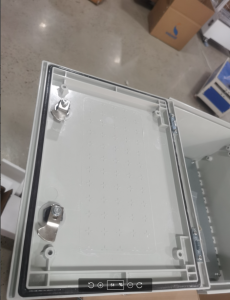
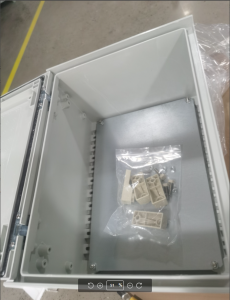
1. Verify Material Suitability Beyond Basic Corrosion Resistance
While standard sheet molding compound (SMC) outperforms mild steel in coastal, wastewater, and chemically aggressive settings, it is not an all-purpose material. You must verify the compound's mechanical, thermal, and chemical profile against the actual operating environment.
-
UV Degradation & Outdoor Exposure: Prolonged exposure to solar radiation can cause resin degradation, potentially exposing glass fibers at the surface. Specify enclosures with documented outdoor UV resistance, such as a UL 746C f1 rating where applicable.
-
Operating Temperature Range: Confirm both the continuous operating temperature and thermal shock thresholds. Allowable limits depend on the specific resin formulation and enclosure design. Internal heat generated by transformers, variable frequency drives (VFDs), and power supplies must also be considered.
-
Chemical Compatibility: Resistance to salt spray does not guarantee resistance to every industrial chemical. Check the specific resin chemistry, such as polyester or vinyl ester, against the concentration and exposure conditions of solvents, acids, and caustic agents at your site.
-
Impact Resistance (IK Rating): For installations exposed to heavy foot traffic, machinery, or mobile equipment, confirm the required impact rating under IEC 62262 and request supporting test documentation.
2. Inspect Gasket Design and Compression — Don't Rely Solely on IP Ratings
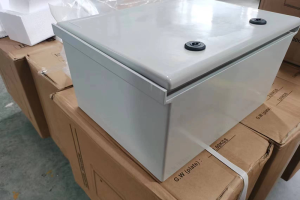
An enclosure's IP65 or IP66 rating under IEC 60529, or NEMA 4X rating under NEMA 250, is a useful starting point. Whether the enclosure maintains the required protection depends on the complete assembly, including the perimeter seal, fasteners, cable glands, and any openings or accessories.
| Gasket Parameter | Engineering Risk | Verification Requirement |
|---|---|---|
| Gasket Material | Incompatible chemicals, UV exposure, or temperature extremes can cause a gasket to swell, harden, or lose elasticity. | Select PUR, silicone, EPDM, or another suitable material according to the actual operating conditions. |
| Compression Uniformity | Uneven tightening can distort the gasket and create leakage paths between fasteners. | Check the cover design, gasket seating surface, fastener spacing, and specified tightening procedure. |
| Maintenance Cycles | Repeated opening and closing can wear the gasket, loosen fasteners, or damage threaded inserts. | For frequent access, evaluate suitable hinges, latches, and replaceable sealing components. Stainless steel hardware may be appropriate for corrosive environments. |
Engineering Tip: Always request the manufacturer's test documentation for the specific enclosure model and configuration. Drilling, field modifications, or uncertified accessories may affect the original protection rating. Confirm whether the modified assembly requires additional testing.
For projects involving custom enclosure components or complementary metal parts, explore our electrical enclosure and manufacturing solutions to discuss your application requirements.
3. Map Internal Usable Volume and Mounting Clearances Early
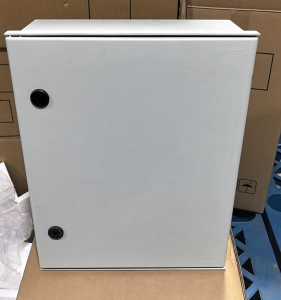
Relying on nominal external dimensions is a common layout trap. Thick composite walls, internal corner boss radii, and mounting hardware encroach directly on usable interior space.
-
Usable vs. Exterior Volume: Fiberglass wall thickness varies by model and design. Reinforced corners and molded features can also reduce usable space. Always request internal dimension drawings or 3D STEP files before finalizing component placement.
-
Mounting Footprint & Water Shedding: External mounting brackets can help avoid unnecessary penetrations through the enclosure wall. If through-wall screws are used, verified blind holes or suitable watertight sealing methods are important to prevent moisture ingress.
-
Clearance for Heat Dissipation & Door Swing: Ensure adequate clearance between hot components, such as power supplies, and the enclosure walls. Fiberglass generally conducts heat less effectively than aluminum or carbon steel. Also verify door swing clearance in confined installations.
Where an installation requires custom mounting plates, support brackets, or internal metal panels, these components can be specified alongside the enclosure. Learn more about our sheet metal fabrication capabilities for custom metal components and assemblies.
4. Specify Cable Glands and Cutouts Prior to Production
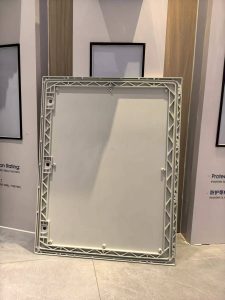
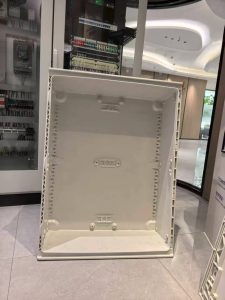
Field-drilling fiberglass poses distinct challenges: tool wear, composite dust, and the risk of delamination or micro-cracks along the hole edge that can compromise sealing.
-
Factory CNC Machining vs. Field Cutting: Whenever possible, specify cable gland cutouts, push-button holes, and conduit interfaces directly in your manufacturing drawing. Controlled factory machining can improve hole positioning, edge quality, and consistency for gland installation. Confirm the appropriate machining process with the enclosure manufacturer.
-
Entry Placement: Position cable entries through the bottom surface whenever practical and consistent with the installation requirements. Side entries require careful attention to sealing and water exposure, while top entries should generally be avoided in exposed outdoor installations unless the design specifically accommodates them.
-
Gland Selection: Ensure cable glands are suitable for the intended environment and compatible with the enclosure's required protection level. Consider UV-stabilized polymer or stainless steel glands where appropriate, and verify the rating of the complete installed assembly.
For projects that also require precision-machined metal interfaces, mounting components, or custom hardware, review our manufacturing and metal fabrication capabilities. Provide the required materials, dimensions, tolerances, and finishing specifications before production.
5. Evaluate Complete Assembly Integration
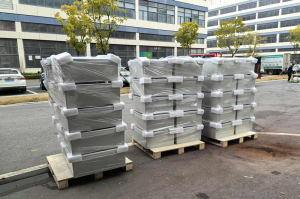
A high-performance enclosure can still fail if it is considered in isolation from its electrical assembly. Evaluate the following factors together.
Example specification for an outdoor, corrosive environment:
-
Target environment: Outdoor / corrosive
-
Material: SMC composite with documented outdoor UV suitability
-
Sealing: Gasket system validated for the required IP or NEMA protection level
-
Fastening: Corrosion-resistant latches and hardware selected for the operating environment
-
Internal layout: Sub-panel with DIN rails and adequate thermal clearances
-
Cable interfaces: Factory-prepared cable entries where available, with compatible glands and verified sealing
Fiberglass is naturally non-conductive, but it does not provide intrinsic chassis grounding. Ensure all conductive internal sub-panels, DIN rails, and metallic conduit components are bonded as required by the applicable electrical code and system design. Dedicated protective bonding conductors or jumpers may be necessary to maintain electrical continuity.
The final specification should cover the enclosure, accessories, mounting hardware, cable entries, and internal electrical assembly as one integrated system.
Technical Checklist for Sourcing & Quote Requests
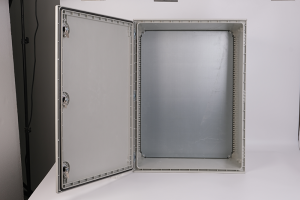
To receive an accurate engineering review and quotation without delay, provide your supplier with the following technical specifications:
-
Dimensional Constraints: Internal usable envelope (W × H × D) and maximum permissible outer dimensions.
-
Environmental Standards: Target IP rating (IP65, IP66, IP67) or NEMA type (4X, 12, 13), operating temperature limits, and details of direct chemical or UV exposure.
-
Mounting Method: Wall-mount brackets, pole-mount straps, or a free-standing plinth.
-
Machining Requirements: 2D drawings (PDF/DWG) or 3D CAD models (STEP) detailing cutout diameters, hole patterns, and surface locations.
-
Internal Accessories: Sub-panel material (galvanized steel, aluminum, or non-metallic), DIN rails, inner swing doors, and thermal management requirements.
-
Order Volume: Initial prototype quantity and estimated production batch quantities.
For projects involving custom brackets, mounting plates, or complementary metal components, our sheet metal fabrication capabilities may also be relevant.
Frequently Asked Questions
Are fiberglass electrical enclosures suitable for outdoor use?
Yes, provided the specific enclosure is designed for the intended outdoor conditions. Check the resin's UV resistance, gasket performance, operating temperature limits, and documented protection ratings. UV-stabilized materials and suitable seals can help extend service life in coastal and outdoor environments.
What is the functional difference between an IP65 and an IP66 enclosure?
Both ratings are dust-tight (IP6X). IP65 protects against water jets using a 6.3 mm nozzle at 12.5 L/min, while IP66 protects against more powerful water jets using a 12.5 mm nozzle at 100 L/min under the applicable test conditions. Neither rating certifies continuous water immersion, which is addressed by IP67 or IP68 testing.
Can fiberglass electrical enclosures be modified on-site?
Yes, if the enclosure manufacturer's instructions permit it. Suitable carbide-tipped or diamond-coated tools may be used depending on the material and cutout requirements. Follow appropriate dust-control procedures and wear suitable respiratory and eye protection when machining glass-fiber composites. Factory-prepared cutouts can help improve dimensional consistency and reduce the risk of installation errors. Any modification should be assessed for its effect on the enclosure's protection rating.
How do fiberglass enclosures handle heat dissipation?
Fiberglass generally has lower thermal conductivity than metals. Heat generated by internal components must therefore be considered during enclosure sizing and thermal design. Depending on the application, solutions may include natural convection, appropriately rated ventilation accessories, or active cooling systems. Any ventilation or cooling openings must be compatible with the required environmental protection level.
Need a Custom Electrical Enclosure or Metal Component?
Choosing the right enclosure requires more than matching dimensions and protection ratings. Material compatibility, sealing performance, mounting clearances, cable entry locations, and assembly requirements must all be considered before production.
At Shenzhen Hofengfab Technology Co., Ltd., we support custom manufacturing projects involving sheet metal components, electrical enclosure-related parts, mounting brackets, and precision-machined components.
To help us review your project, please provide:
-
2D engineering drawings (PDF/DWG) or 3D CAD files (STEP)
-
Required dimensions, materials, and environmental conditions
-
Target IP or NEMA rating, where applicable
-
Cable entry, mounting, and assembly requirements
-
Prototype quantity and estimated annual demand
Our team can review your drawings and manufacturing requirements to discuss suitable production options.
Contact our team to discuss your project or request a quotation:
-
Mia Yang : mia@hofengfab.com
-
Vivian Zhang: vivian@hofengfab.com
-
Website: www.hofengfab.com
-
Product and quotation enquiries: Explore our enclosure catalogue