


Thinking about espresso every day? Oh, isn't that sweet? ☕
For coffee brands and equipment manufacturers, an espresso tamper is more than a simple barista tool. Material selection, weight, dimensions, surface finish, and manufacturing consistency all need to be considered when developing a product for the market.
This is where CNC machining becomes particularly useful.
So, how are espresso tampers made?

Why Use CNC Machining for Espresso Tampers?
CNC machining allows a product to be manufactured directly from a 2D drawing or 3D CAD model.
For an espresso tamper, this makes it possible to produce precise bases, ergonomic handles, grooves, threads, chamfers, and custom branding while maintaining repeatable dimensions across production batches.
CNC machining is also well suited to customized coffee accessories and prototype development. A coffee brand can test a new design, make adjustments, and move into repeat production without immediately investing in dedicated molds.
For products where appearance and dimensional accuracy are both important, this flexibility can be particularly valuable.
Choosing the Right Material
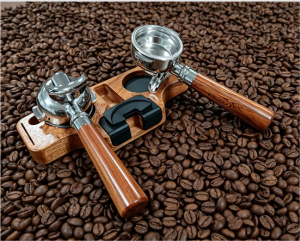
Material selection affects the weight, appearance, machining characteristics, and cost of a coffee tamper.
304 Stainless Steel
304 stainless steel provides a durable and substantial feel, along with good corrosion resistance. It is a suitable option for premium coffee equipment and accessories.
Aluminum
Aluminum is lightweight, easy to machine, and suitable for anodizing in different colors. It is a popular choice for modern coffee accessories where weight and visual design are important.
Brass
Brass provides a heavier feel and distinctive metallic appearance, making it an option for coffee products with a more traditional or premium aesthetic.
For some custom designs, 304 stainless steel and aerospace-grade aluminum can be combined to achieve a balance between durability, weight, and appearance.
CNC Turning and Milling
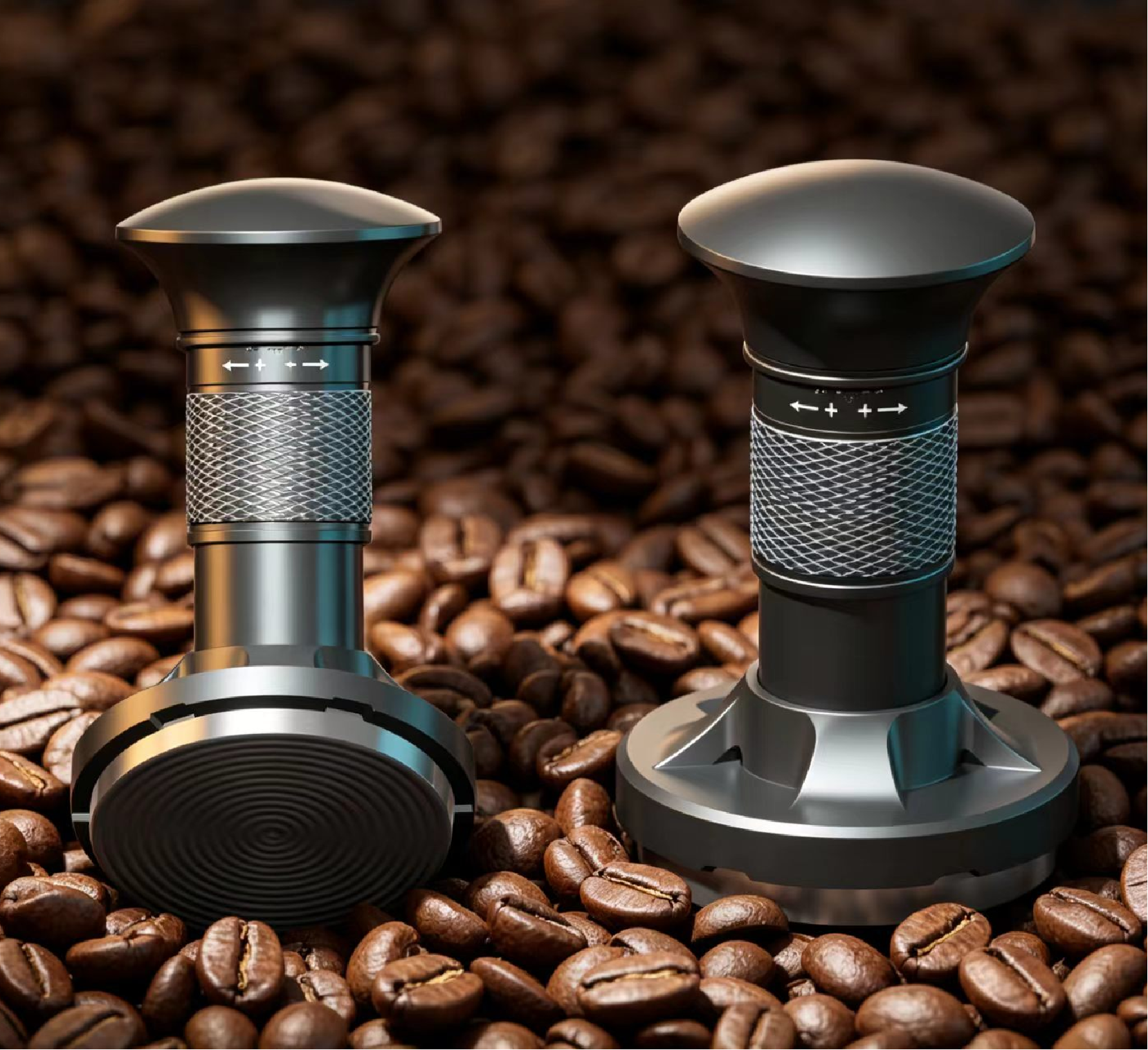
Many espresso tamper components have rotationally symmetrical geometry, making CNC turning an efficient manufacturing process.
The workpiece rotates while cutting tools create the required profile. This process can be used for:
- Cylindrical handles
- Tamper bases
- Tapered profiles
- Grooves
- Threads
- Chamfers
For more complex features, CNC milling can be used to produce slots, contours, logo areas, and other non-round details.
Depending on the design, turning and milling can be used together to complete a custom coffee accessory.
Precision Matters in Tamper Manufacturing
Although an espresso tamper is relatively small, several dimensions can have a direct impact on the finished product.
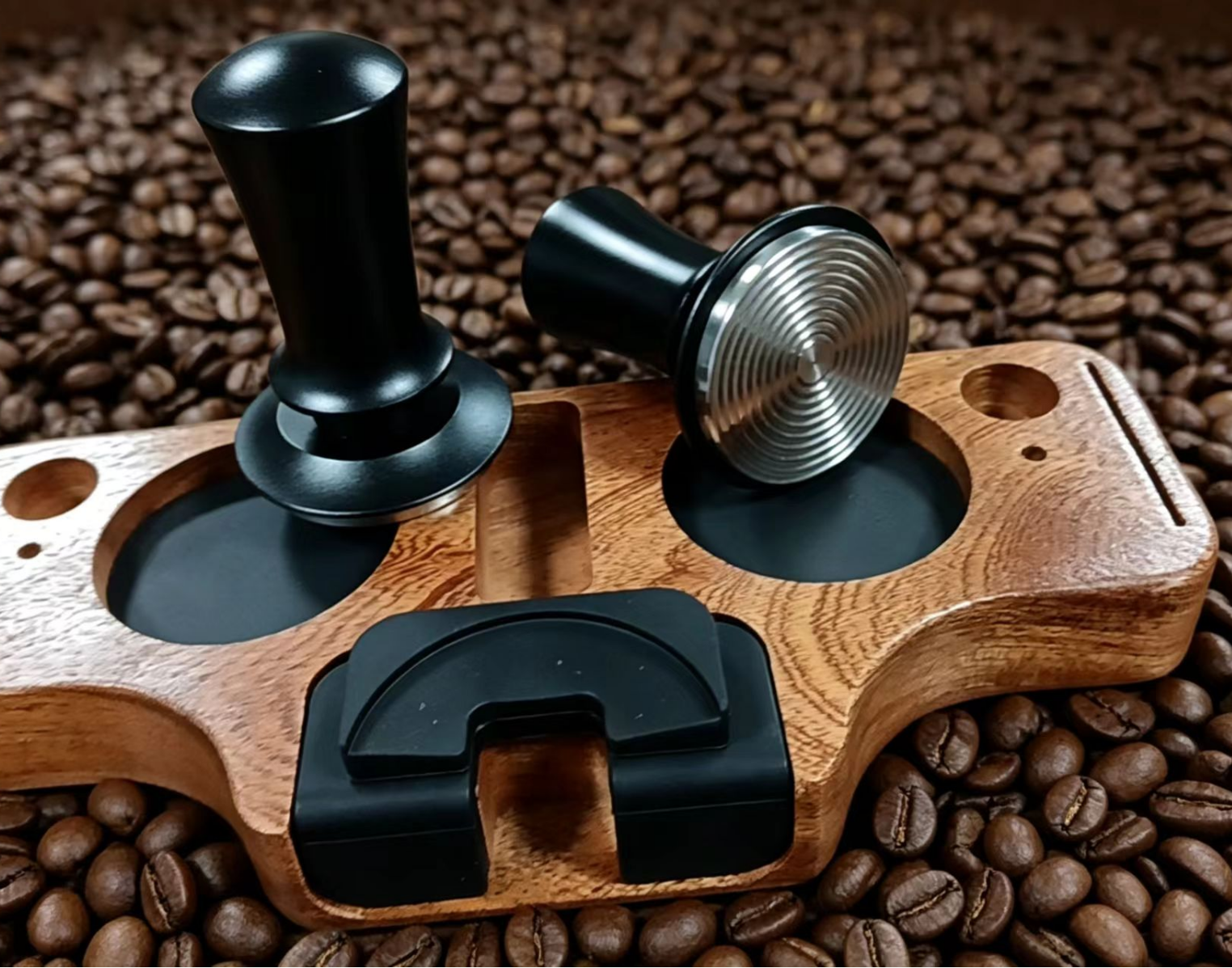
The tamper base diameter needs to correspond to the intended portafilter basket. Flatness, concentricity, and surface finish should also be considered during the design and manufacturing process.
The handle requires a different approach. Its dimensions and shape can be optimized for grip, weight distribution, and overall product appearance.
Not every feature requires extremely tight tolerances. A well-designed CNC machining process focuses tighter dimensional control on the features that affect function, assembly, and appearance.
This approach helps maintain product quality while avoiding unnecessary manufacturing costs.
Surface Finishing and Branding
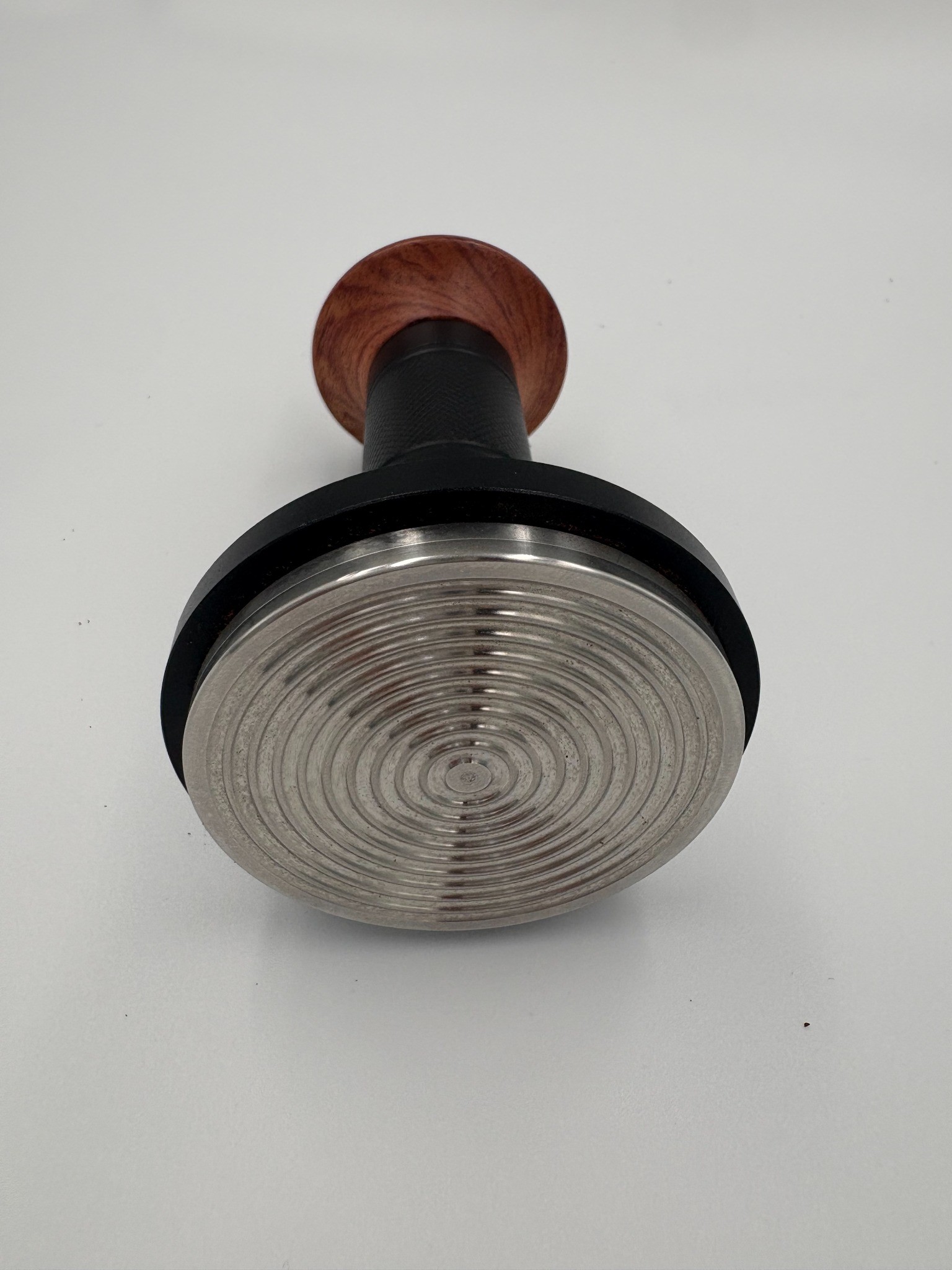
CNC machining creates the geometry, while surface finishing gives the product its final appearance.
For aluminum coffee accessories, common finishing options include:
- Anodizing
- Sandblasting
- Brushing
- Polishing
- Laser engraving
For stainless steel components, polishing, brushing, bead blasting, and other finishing processes can be used depending on the desired appearance.
Custom logos and product markings can also be added through CNC engraving or laser marking.
This gives coffee brands more freedom to create products that match their existing visual identity.
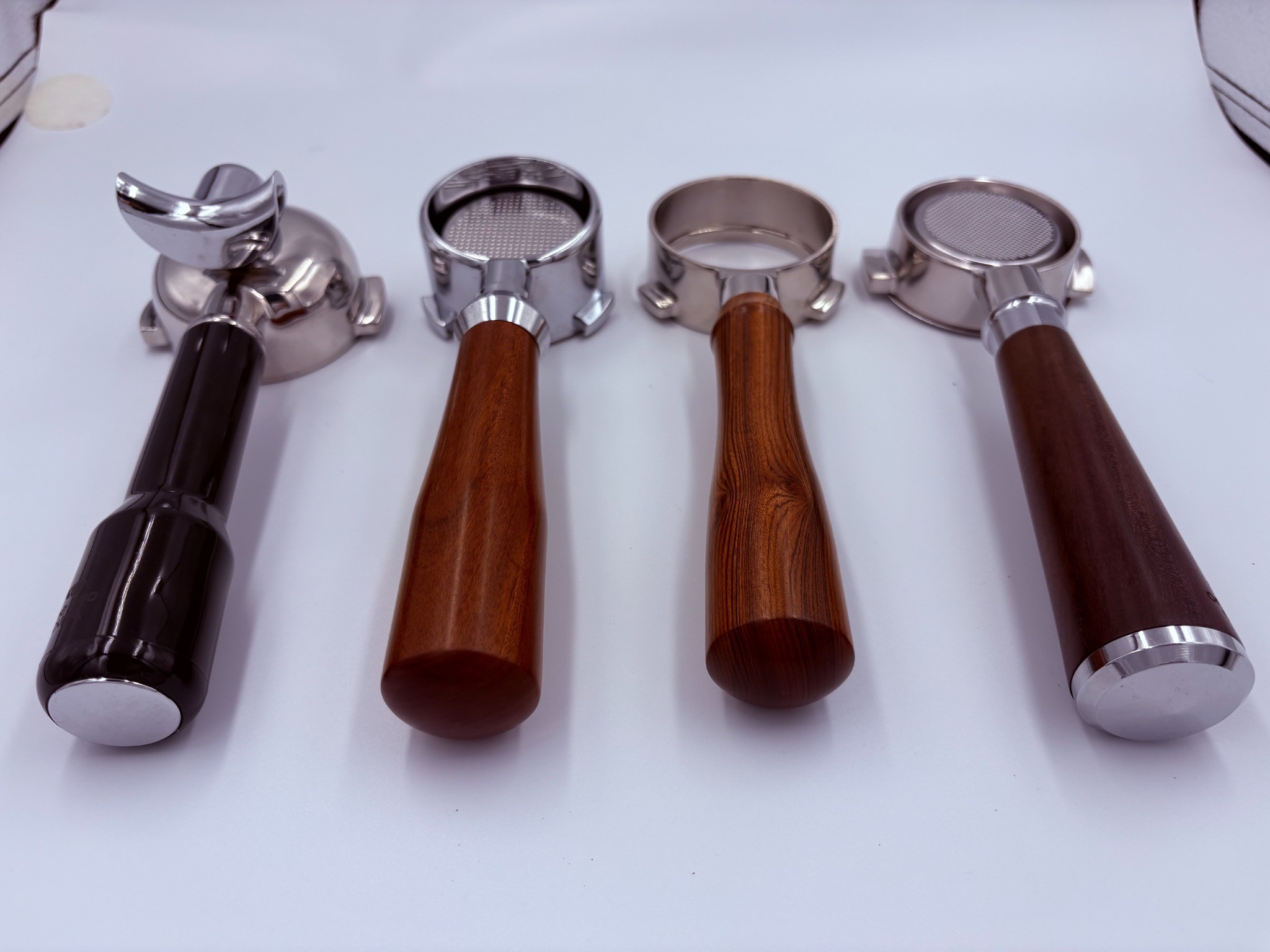
Custom Espresso Tampers for Coffee Brands
CNC machining allows coffee brands to move beyond standard off-the-shelf designs.
A custom espresso tamper can be developed with:
- Custom handle geometry
- Different base diameters
- Custom weight requirements
- Knurled or textured surfaces
- Adjustable mechanisms
- Custom logos
- Different colors and finishes
More specialized designs may also incorporate features such as adjustable impact force or an anti-clump design, combining functional requirements with a distinctive product appearance.
For OEM and private-label projects, these details can help turn a standard coffee tool into a product designed specifically for a brand.
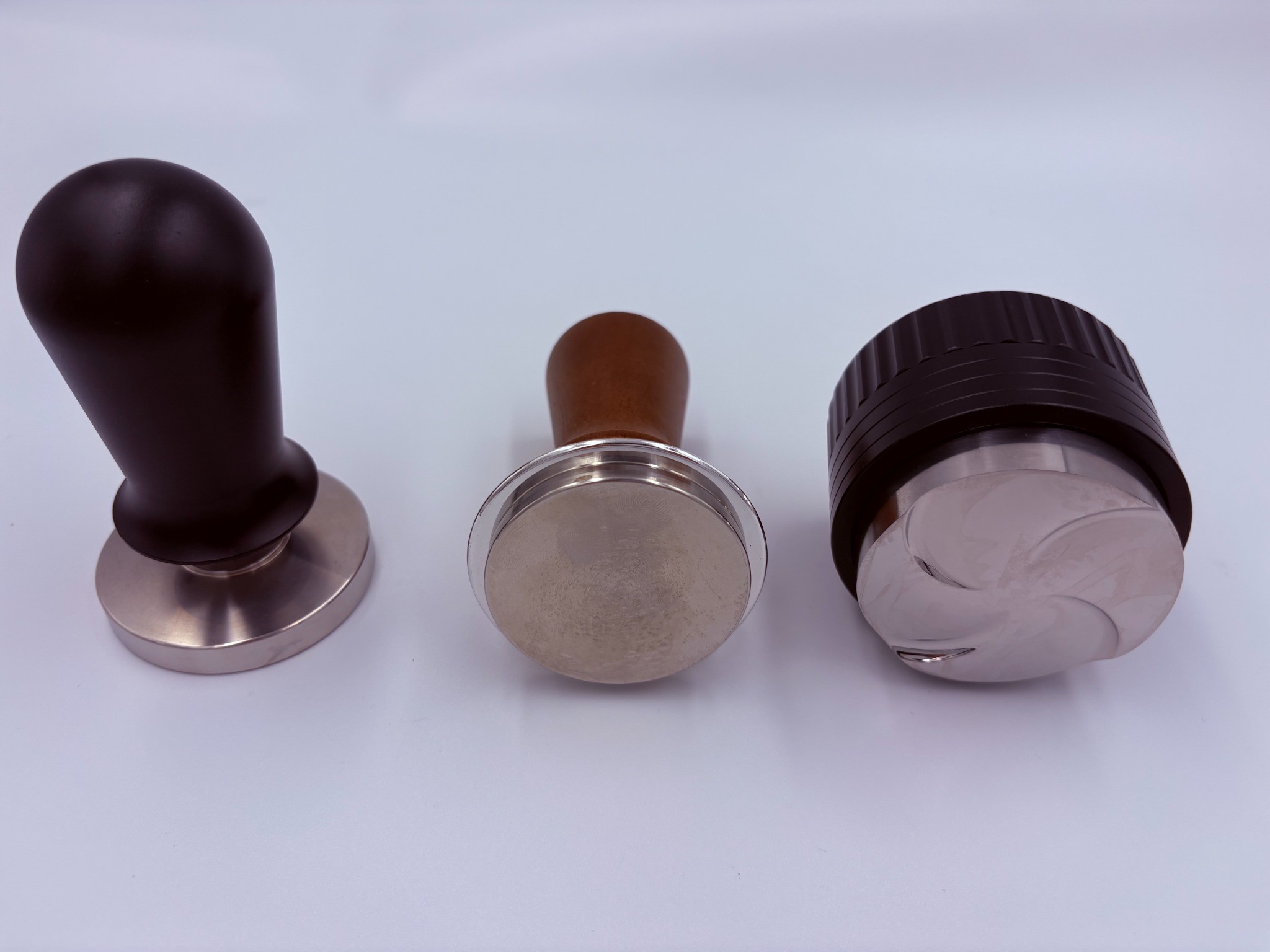
From Prototype to Production
For a new coffee accessory, the first production run is not always the final version.
A prototype allows the product team to evaluate:
- Dimensions
- Weight
- Ergonomics
- Appearance
- Surface finish
- Assembly
- Overall user experience
Once the design is confirmed, the manufacturing process can be optimized for repeat production.
This makes CNC machining a practical solution for coffee brands and equipment manufacturers developing new products, from initial prototypes to small batches and larger production runs.
The same approach can also be applied to other CNC coffee accessories, including coffee distributors, levelers, dosing cups, portafilter components, tamper stands, and other precision metal parts.
Have a Custom Coffee Product in Mind?
From espresso tampers and coffee distributors to custom metal components, we help customers develop and manufacture high-quality CNC-machined coffee accessories.
Send us your drawings, 3D files, or product requirements to discuss your next CNC machining project.
[ REQUEST A CNC MACHINING QUOTE → ] mia@hofengfab.com