


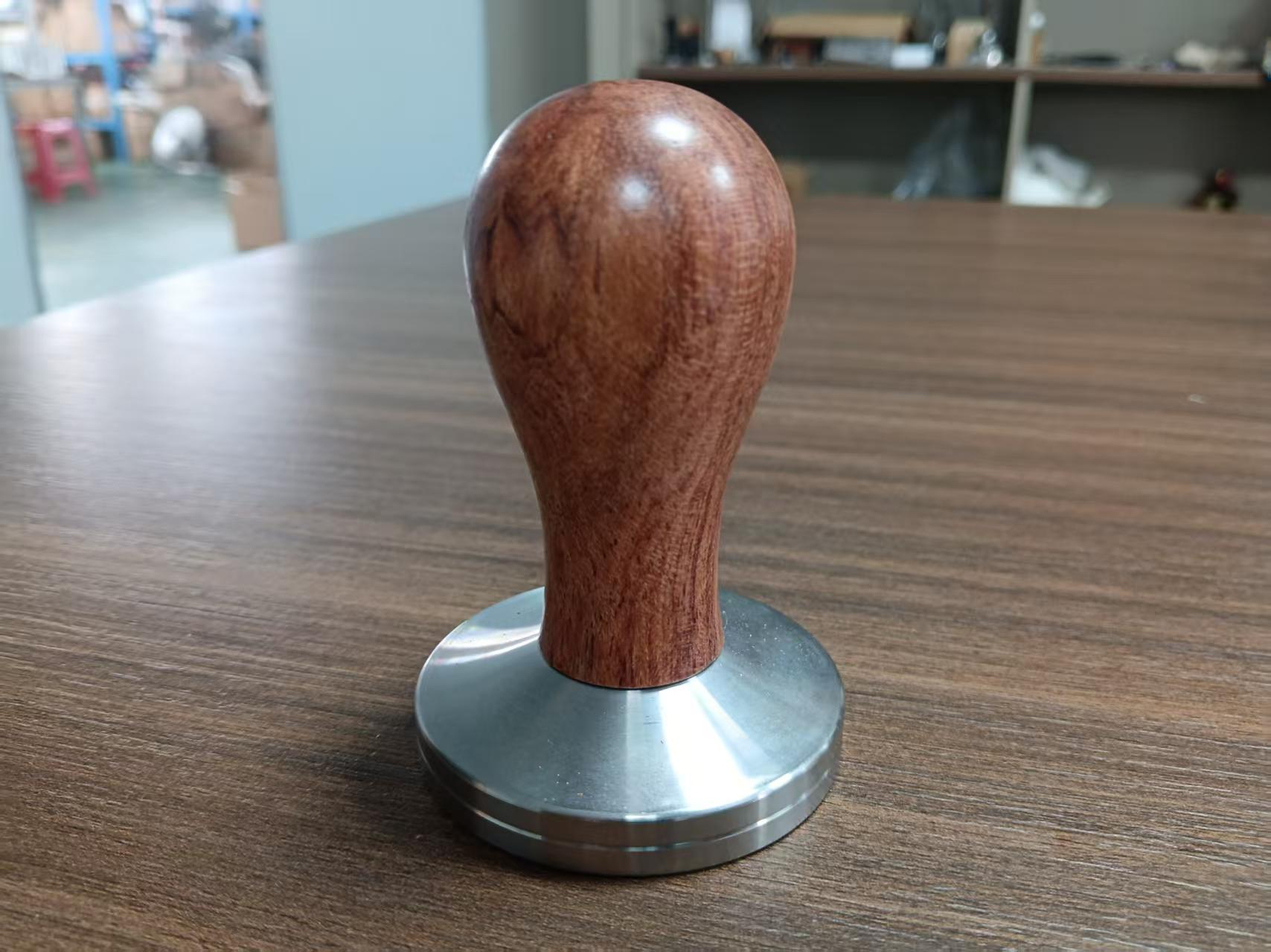
An espresso tamper may look like a simple product: a handle, a base, and a precisely machined surface for compressing coffee grounds.
But for a premium tamper, the details matter.
The diameter of the base, the geometry of the handle, the weight distribution, the surface finish, and the transition between different components all influence how the tamper looks, feels, and performs.
This is where CNC machining becomes particularly useful. With precise machining and careful finishing, a relatively small component can be turned into a refined product suitable for specialty coffee brands, equipment manufacturers, and custom product lines.
At Hofeng, we work with customers to turn these product concepts into manufacturable CNC machined components, from prototype development through production.
Why Precision Matters in an Espresso Tamper
The basic function of a tamper is straightforward: compress the coffee grounds evenly inside the portafilter.
But the relationship between the tamper base and the filter basket is more precise than it may initially appear.
A base that is too small can leave unnecessary space around the edge of the basket. A base that is too large may not fit properly.
For a standard 58 mm espresso setup, a tamper diameter around 58.5 mm is commonly used to minimize unnecessary movement inside the basket.
For custom products, dimensions can be developed according to the customer's portafilter, basket, and design requirements.
This is one area where CNC machining offers an advantage: critical dimensions can be controlled directly from the customer's CAD model and technical drawings.
Choosing the Right Material
Material selection affects more than appearance.
It also determines weight, rigidity, machining characteristics, surface finish, and the overall feel of the finished tamper.
Aluminum
Aluminum is widely used for CNC machined coffee accessories because it offers a useful combination of low weight, machinability, and corrosion resistance.
It is also suitable for anodizing in different colors, making it a practical choice for brands that want their products to match a particular visual identity.
Stainless Steel
Stainless steel provides a heavier and more substantial feel.
It offers good corrosion resistance and can be finished through processes such as polishing or brushing to achieve different appearances.
For tamper bases, stainless steel can be particularly attractive when a premium weight and solid feel are part of the product concept.
Choosing Based on the Product
There is no single material that is right for every tamper.
A lightweight aluminum design may suit a modern, minimalist product, while a stainless steel design may be more appropriate for a heavier premium accessory.
At Hofeng, material selection can be discussed together with machining requirements, surface finishing, target quantity, and application before production begins.
Designing the Handle
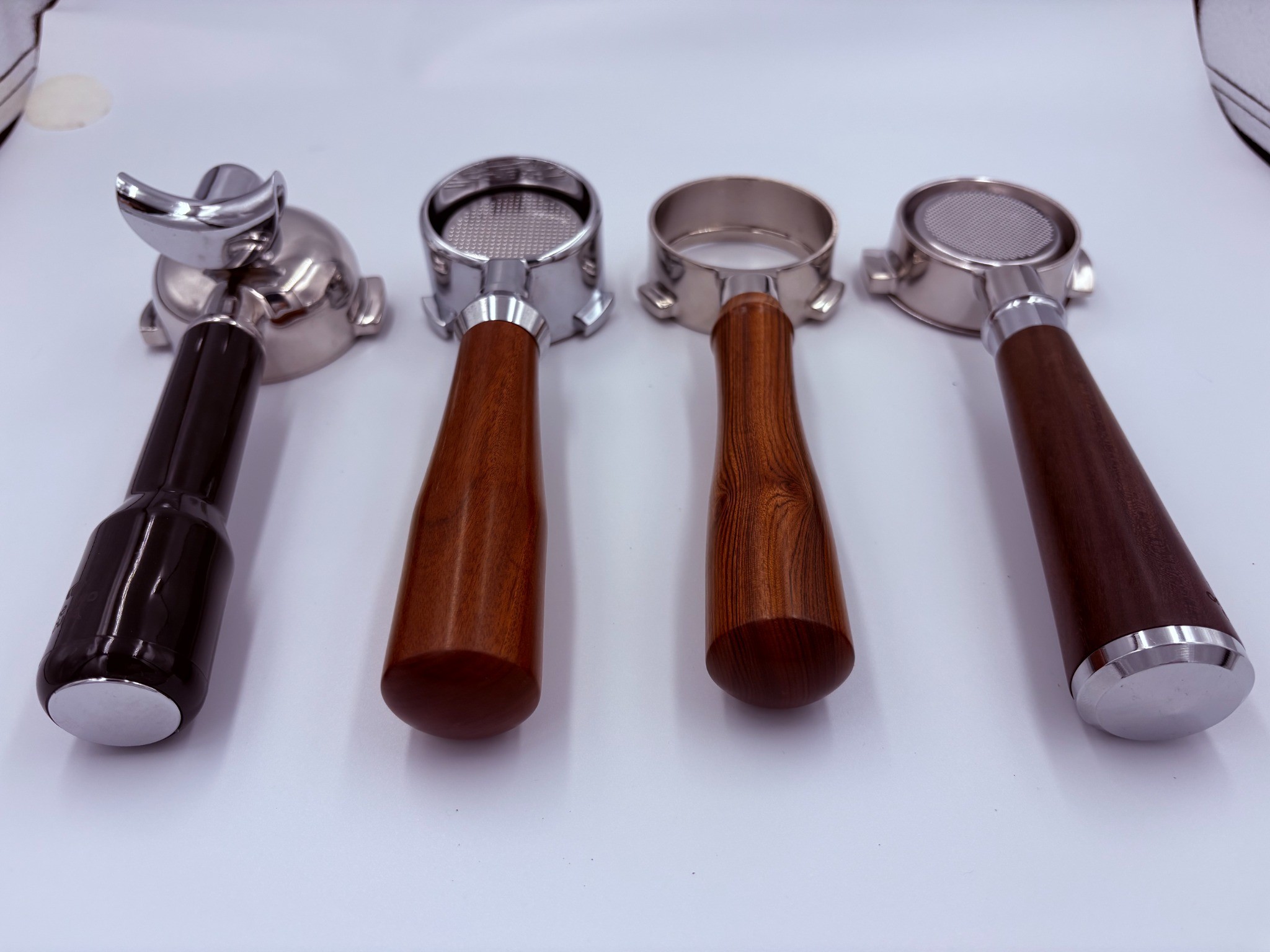
The handle is the part of the tamper that the user interacts with directly.
Its height, diameter, taper, curvature, and transition into the base all affect the experience of using the product.
CNC machining allows designers to develop detailed three-dimensional handle geometries directly from CAD data.
Depending on the design, this can include:
- Tapered profiles
- Rounded edges
- Ergonomic grip areas
- Decorative grooves
- Contoured surfaces
- Custom logos and engraving
The goal is not simply to make the handle complicated.
Every feature should have a purpose, whether that is improving ergonomics, reducing sharp edges, creating a distinctive appearance, or reinforcing a brand's design language.
For coffee brands developing a custom tamper, this also creates an opportunity to make a relatively small accessory visually consistent with the rest of the product range.
CNC Machining for Custom Espresso Accessories
One advantage of CNC machining is its flexibility.
Unlike a fixed-production product, a CNC machined tamper can be customized without creating a dedicated injection mold or stamping die.
This can be particularly useful for brands developing:
- Private-label espresso tampers
- Custom coffee accessories
- Premium barista tools
- Limited-edition products
- Branded promotional products
- Prototype coffee equipment
The design can be modified directly in CAD, allowing dimensions, handle geometry, engraving, and other details to be adjusted according to the project requirements.
For new product development, this makes CNC machining a practical way to validate a design before moving into larger-scale production.
From CAD Design to Finished Tamper
A typical CNC machined tamper project may involve several stages:
CAD Review → Material Selection → CNC Machining → Deburring → Surface Finishing → Logo/Engraving → Inspection → Assembly → Packaging
At Hofeng, the manufacturing process can be coordinated across these stages according to the customer's requirements.
Our manufacturing capabilities include CNC machining, laser cutting, waterjet cutting, die casting, and 3D printing, allowing different manufacturing methods to be considered depending on the product design and production requirements.
For a CNC tamper, machining may be the primary process, while additional processes such as anodizing, polishing, brushing, or laser engraving can be used to achieve the final appearance.
Prototype First, Production Later
For a new espresso accessory, producing a prototype before committing to a larger quantity can be extremely useful.
A prototype allows the customer to evaluate:
- Overall dimensions
- Portafilter fit
- Handle ergonomics
- Weight and balance
- Surface appearance
- Logo placement
- Packaging requirements
Once the prototype is approved, the manufacturing process can be optimized for production.
This is especially important when moving from a single prototype to hundreds or thousands of pieces.
At Hofeng, we can support projects from prototype and small-batch production to larger-volume manufacturing, helping customers identify potential manufacturing issues before mass production.
Surface Finishing Makes a Difference
Precision machining is only part of the final product.
For consumer-facing products such as espresso accessories, surface appearance can be just as important as dimensional accuracy.
Depending on the material and desired appearance, finishing options may include:
- Anodizing
- Polishing
- Brushing
- Sandblasting
- Powder coating
- Laser engraving
For example, a CNC machined aluminum tamper can be anodized in a brand-specific color, while stainless steel components can be polished or brushed for a more premium appearance.
Custom logos can also be added through engraving or other marking processes.
This allows manufacturers to produce not just a functional component, but a finished product that reflects the customer's brand.
Designing for Manufacturability
A good-looking CAD model is not necessarily an efficient CNC design.
Features such as extremely deep pockets, very small internal corners, difficult-to-reach surfaces, or unnecessary machining operations can increase production time and cost.
During the design review stage, Hofeng can evaluate the model from a manufacturing perspective and identify opportunities to simplify the machining process.
For example, using appropriate internal radii can allow standard cutting tools to be used more efficiently. Reducing unnecessary setups can also improve both production efficiency and consistency.
This type of DFM (Design for Manufacturing) review is particularly valuable before a product enters production.
Why CNC Machining Works Well for Premium Coffee Products
Espresso accessories occupy an interesting position between engineering and consumer product design.
They need to function precisely, but they are also products that customers see and physically interact with every day.
That makes details such as:
Fit + Weight + Ergonomics + Surface Finish + Appearance
all part of the product experience.
CNC machining is well suited to this combination because it provides the dimensional control needed for functional components while also allowing designers considerable freedom over external geometry.
For brands looking to develop a distinctive coffee accessory, this balance can be especially valuable.
From One Tamper to Your Product Line
An espresso tamper does not have to be an isolated product.
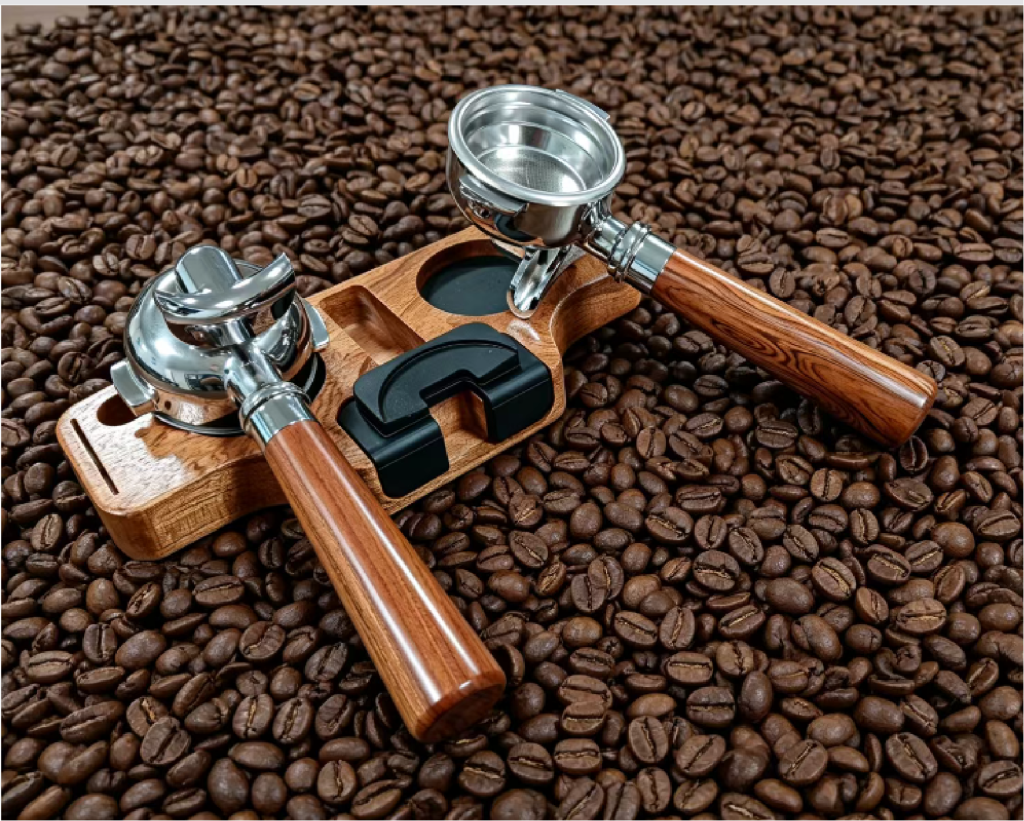
Once the basic design language has been established, the same approach can be applied to other coffee accessories such as:
- Coffee distributors
- WDT tools
- Dosing cups
- Portafilter handles
- Knock boxes
- Grinder accessories
- Espresso machine components
Using consistent materials, finishes, colors, and machining details can help create a recognizable product family.
Hofeng can support this type of product development by combining CNC machining with other manufacturing processes according to the design and production requirements.
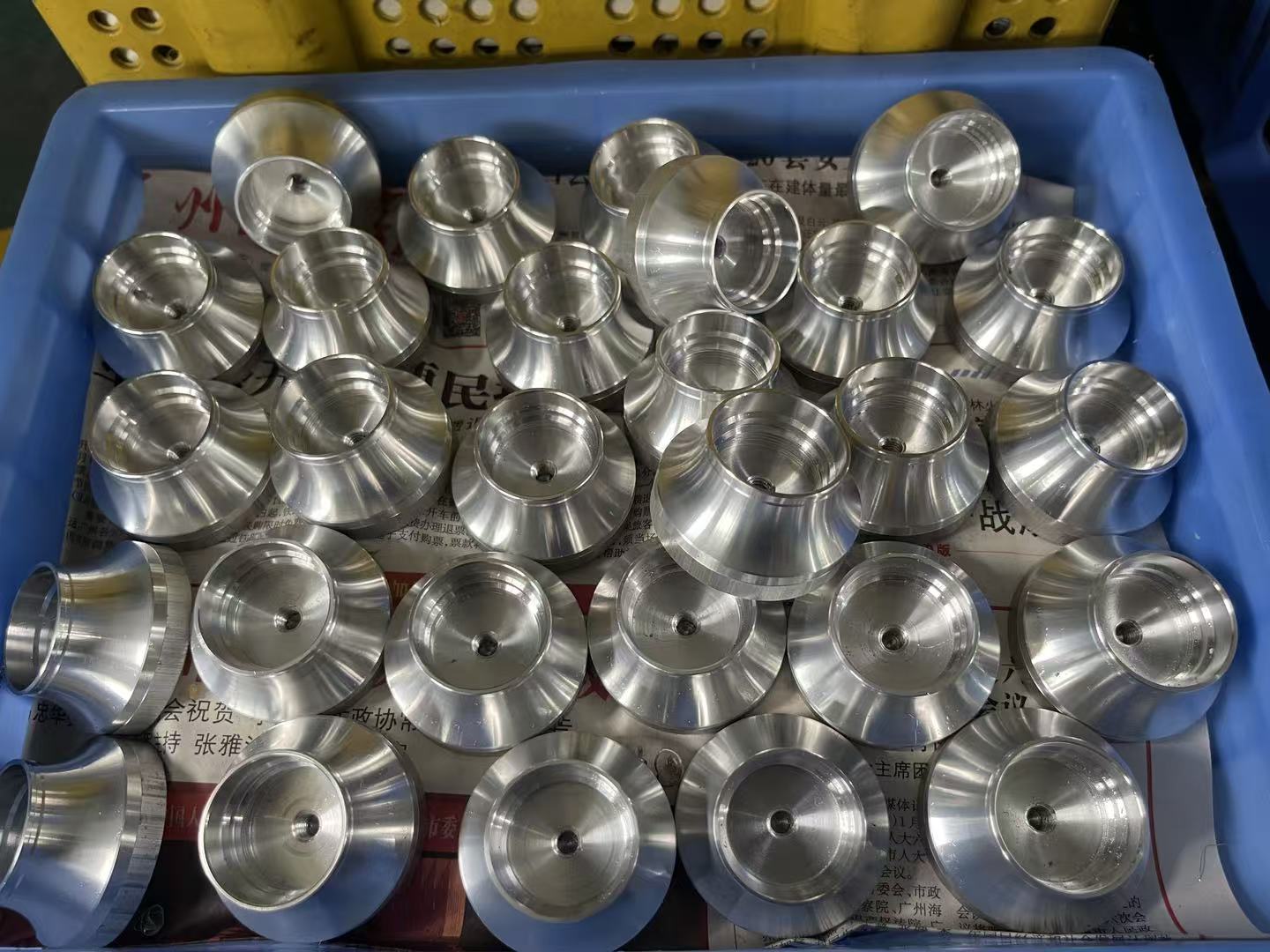
What Hofeng can do
A precision espresso tamper may be small, but producing one well requires attention to many details.
Material selection affects weight and machining behavior. Geometry determines ergonomics. Dimensional accuracy affects fit. Surface finishing influences both appearance and the user's perception of quality.
CNC machining brings these elements together by allowing a digital design to be translated into a precise, repeatable physical product.
For coffee brands, equipment manufacturers, and product developers looking for a custom CNC machined espresso tamper, the process can start with something as simple as a CAD drawing or product concept.
Hofeng can help take that concept from prototype to production, including CNC machining, surface finishing, engraving, inspection, and other manufacturing requirements.
If you have an existing drawing or are still developing the design, contact Hofeng to discuss your project and manufacturing requirements.