




When sourcing custom junction boxes, a detailed RFQ can make the quotation process much faster and more accurate. A basic description may explain what the junction box is used for, but it may not provide enough information for a manufacturer to calculate the actual production cost.
For stainless steel junction boxes, especially those involving terminal blocks, cable glands or ATEX requirements, several technical details can directly affect the final quotation.
Here are the key points to prepare before sending your junction box RFQ.
1. Provide 2D Drawings or 3D Models
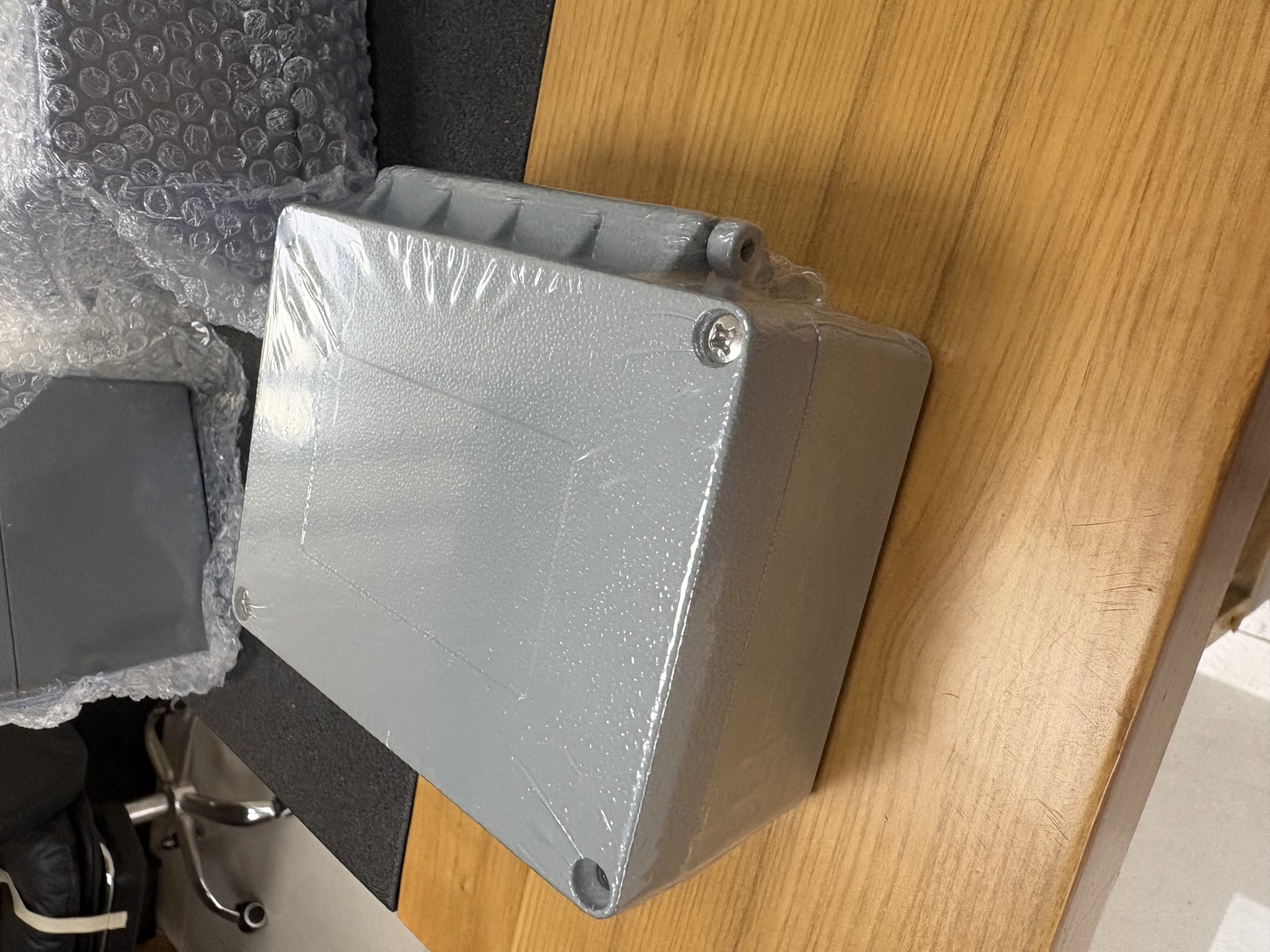
The most useful information for a custom junction box manufacturer is the product drawing.
A 2D DWG or PDF drawing can show:
- Overall enclosure dimensions
- سماكة الصفيحة
- Mounting holes
- Cable entry locations
- Hole sizes
- Terminal block positions
- Cover and hinge details
- Gasket requirements
- Welding or bending details
A 3D STEP model can provide additional information about the overall structure and component arrangement.
If both are available, providing 2D drawings in DWG format and 3D models in STEP format can help the engineering team review the design more efficiently.
2. Specify the Required Quantity
Quantity is one of the most important factors in a quotation.
For example, an RFQ may list several junction box tags, but the supplier still needs to know whether each item requires:
- 1 pc
- 10 pcs
- 50 pcs
- 100 pcs
The unit price can change significantly depending on the order quantity because material purchasing, cutting, fabrication, assembly and other production costs are distributed differently across different batch sizes.
Instead of simply listing:
AJB-013
AJB-014
AJB-015
it is better to provide:
AJB-013 — 10 pcs
AJB-014 — 20 pcs
AJB-015 — 10 pcs
This allows the manufacturer to prepare a more realistic quotation.
3. Specify the Stainless Steel Grade
“Stainless steel” is not a sufficiently precise material specification for many industrial projects.
For example, the required material could be:
- SS304
- SS316
- SS316L
The material grade affects both material cost and suitability for the operating environment.
For projects in chemical, petrochemical, marine or other corrosive environments, the stainless steel grade should be clearly specified in the RFQ or technical drawing.
4. Include the Required IP Rating
If the junction box will be installed outdoors or in an industrial environment, the required enclosure protection should be clearly stated.
على سبيل المثال:
- IP65
- IP66
- IP67
- IP68
The IP requirement can influence the enclosure design, gasket selection, cable glands and assembly method.
Therefore, simply specifying “waterproof junction box” is usually not enough for accurate quotation and engineering review.
5. Clarify Cable Gland Requirements
Cable entry requirements should include more than just the number of holes.
For example, an RFQ might specify:
- 4 × PG21
- 1 × PG36
But the supplier may still need to know whether the customer requires the cable glands themselves or only the corresponding holes in the enclosure.
If cable glands are included in the supply scope, additional specifications may be required, such as:
- المواد
- IP rating
- Cable diameter range
- Thread type
- ATEX certification, if applicable
Clearly defining the supply scope helps avoid differences between the quoted price and the customer's actual expectations.
6. Provide Terminal Block Specifications
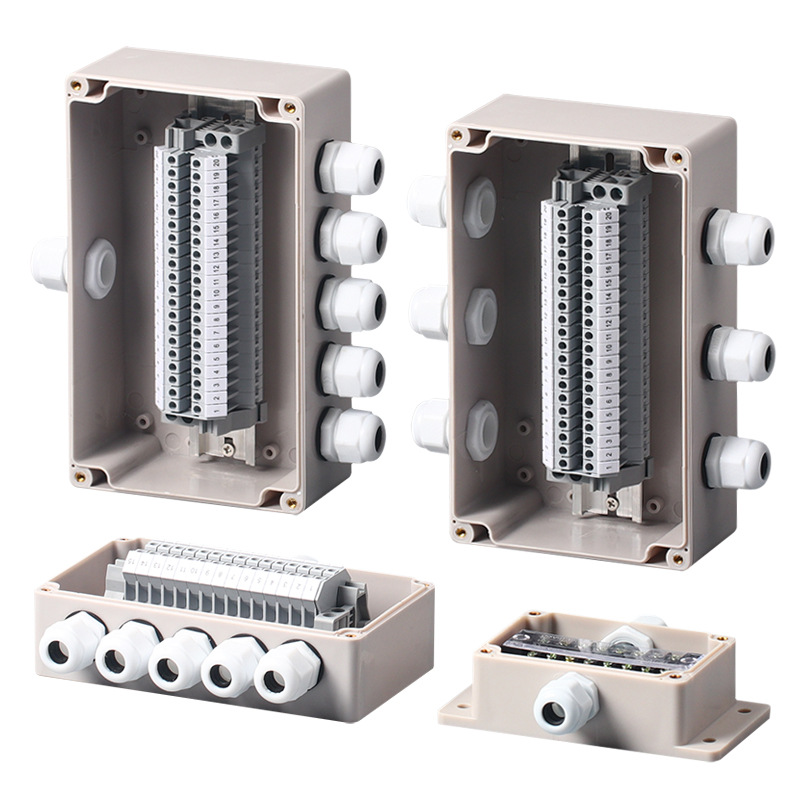
The number of terminal blocks alone may not be enough.
For example, an RFQ may require 36 or 108 terminals, but the supplier may still need to know:
- Terminal block type
- Current rating
- Voltage rating
- Wire size
- Brand or preferred model
- Terminal arrangement
- Accessories required
If a specific brand or model is required, it is best to include it in the RFQ or BOM.
7. Pay Special Attention to ATEX Requirements
ATEX junction boxes require more technical information than standard industrial enclosures.
Simply writing “ATEX” may not be sufficient for a supplier to determine the correct product configuration.
Depending on the project, the RFQ may need to specify requirements such as:
- Hazardous area Zone
- Gas Group
- Temperature Class
- Ex protection type
- Required certification
- Cable gland requirements
- Terminal block requirements
The manufacturer should review these requirements before confirming whether the proposed enclosure and components are suitable.
8. Check the Numbers and Terminal Sequence
Technical descriptions should also be checked for consistency before sending an RFQ.
For example, if a junction box requires 108 terminal blocks and each circuit contains three terminals:
1+ / 1- / 1S
then:
36 circuits × 3 terminals = 108 terminals
The expected sequence would therefore normally be:
1+/1-/1S through 36+/36-/36S
If the description contains a different number in the middle of the sequence, the supplier may need to clarify whether it is a typing error or an intentional configuration.
This kind of small inconsistency can create unnecessary back-and-forth during quotation and engineering review.
9. A Complete RFQ Helps Both Sides
A good RFQ does not necessarily need to be complicated.
For a custom junction box project, the most useful information usually includes:
| Information | Example |
|---|---|
| Drawing | DWG / PDF / STEP |
| الكمية | pcs per JB Tag |
| المواد | SS304 / SS316L |
| الأبعاد | L × W × H |
| IP Rating | IP66 |
| Cable Entries | PG21 / PG25 / PG36 |
| Cable Glands | Included / excluded |
| Terminal Blocks | Quantity + specification |
| ATEX | Zone / Gas Group / T-Class / Ex type |
| النهاية | Brushed / powder coating / etc. |
Providing these details at the beginning can significantly reduce quotation revisions and help the supplier identify technical issues before production.
Welcome to contact with Hofeng
A good junction box RFQ is not simply a product name and a list of accessories. Drawings, quantities, material grades, enclosure ratings, cable entry requirements, terminal block specifications and certification requirements all contribute to the final cost and manufacturability.
If you are sourcing custom junction boxes, providing 2D drawings, 3D models and a clear technical specification can help your supplier understand the project faster and provide a more accurate quotation.