




In oil & gas, petrochemical, power, and other large industrial projects, large-cross-section cables often require dedicated terminal boxes for termination, interconnection, and maintenance.
Compared with ordinary junction boxes, terminal boxes designed for 240 mm², 400 mm², and similar large cables require greater attention to enclosure dimensions, mechanical strength, terminal capacity, and cable bending space.
This article explains the key points to consider when selecting a terminal box for large-cross-section cables.
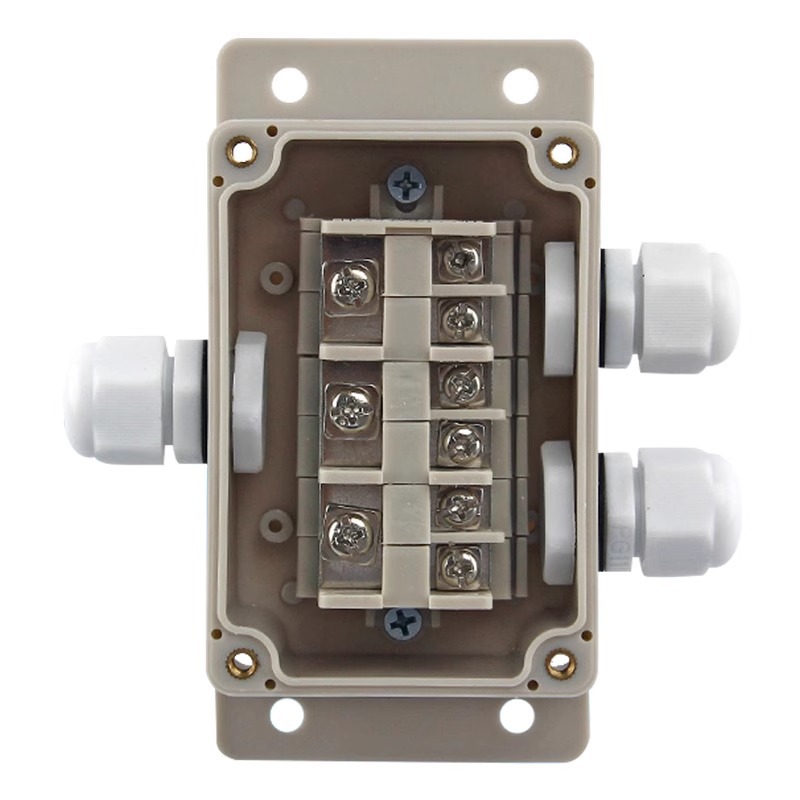
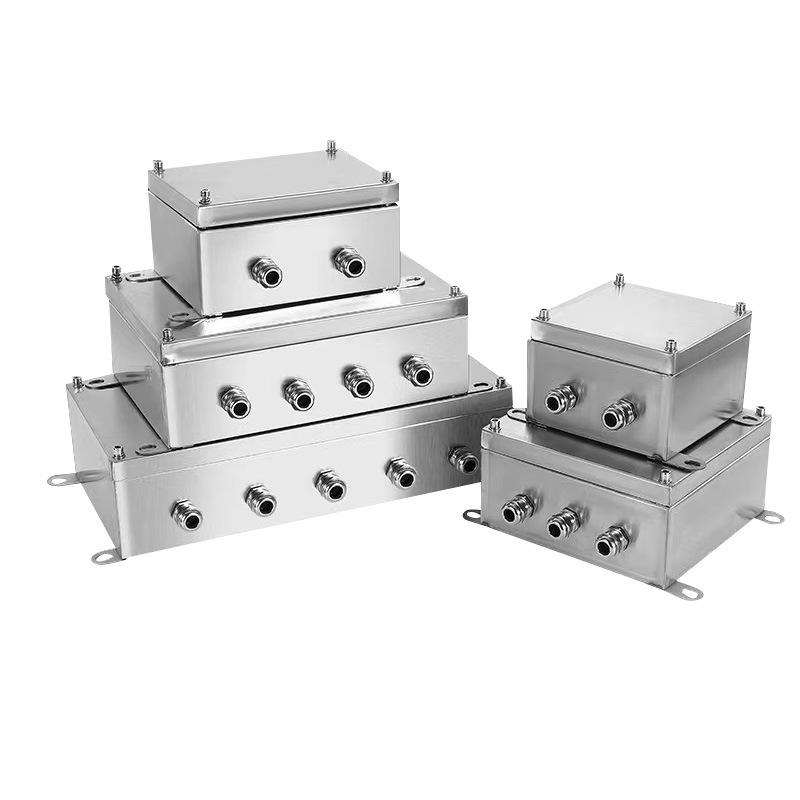
1. Confirm the Cable Specification First
A typical project requirement may specify:
1 Run × 4 Core × 240 mm² cable
Here:
- 1 Run means one cable run
- 4 Core means four conductors
- 240 mm² means each conductor has a cross-sectional area of 240 mm²
The cable itself is normally not included in the terminal box supply scope.
This cable specification is mainly used to determine:
- Terminal capacity
- Internal wiring space
- Cable entry dimensions
- Cable bending radius
- Cable fixing arrangement
- Earthing connection capacity
For a 240 mm² cable, the enclosure must provide sufficient space for stripping, bending, lug installation, and termination.
If the enclosure is too small, installation on site can become very difficult.
2. Terminal Size Should Not Be Selected Only According to Cable Size
A 240 mm² cable does not necessarily require a terminal rated only for 240 mm².
For example, a project drawing may specify:
6 Nos. of termination blocks suitable for 400 mm² cable.
This means the terminal blocks are designed to accommodate conductors up to 400 mm², while the actual cable being connected may be 240 mm².
Using a higher-capacity terminal can provide:
- More mechanical connection space
- Greater flexibility
- Better compatibility with large cable lugs
However, the actual conductor range of the terminal must still be confirmed to ensure that a 240 mm² conductor can be connected securely.
3. A Termination Block Is Not the Same as a Cable Lug
This distinction is important.
A termination block is normally fixed inside the enclosure and provides the actual connection point.
A cable lug is crimped onto the end of the cable conductor and then bolted to a terminal block, busbar, or similar connection point.
Therefore, when a drawing specifies:
6 termination blocks suitable for 400 mm² cable
it should not automatically be interpreted as six cable lugs.
If the drawing does not clearly define the terminal construction, the supplier should confirm whether the required arrangement is:
- Individual single-pole terminals
- Copper busbar-type terminals
- Bolted terminals
- Terminals supplied with cable lugs
- A six-position terminal assembly
- Electrically isolated individual terminals
Where the design is unclear, a practical preliminary interpretation is to use six individual high-current termination blocks installed in one row, subject to final drawing approval.


4. Enclosure Size Must Allow Enough Cable Working Space
For a 4-core × 240 mm² cable, the enclosure should not be sized only according to the physical dimensions of the terminals.
Space must also be provided for:
- Cable stripping
- Core separation
- Cable bending
- Crimping
- Cable lug installation
- Bolt tightening
- Maintenance access
A practical preliminary enclosure size may be:
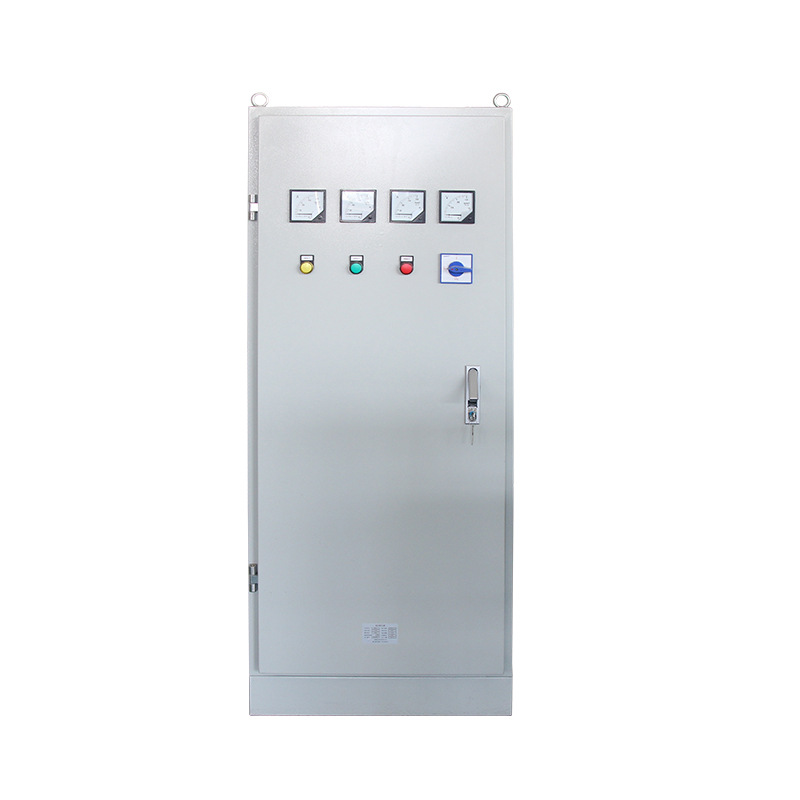
800(W) × 1000(H) × 400(D) mm
This size provides reasonable working space for large cable termination.
The dimensions serve different purposes:
- 800 mm width provides sufficient space for multiple large terminals
- 1000 mm height provides enough room for cable bending and core separation
- 400 mm depth helps accommodate heavy-duty terminals and cable lugs
The final enclosure size should still be verified against the actual terminal dimensions, cable outside diameter, and minimum bending radius.
5. Enclosure Material and Plate Thickness
Typical enclosure materials include:
- Mild steel
- Acero laminado en frío
- Stainless steel 304
- Stainless steel 316
For many industrial applications, a properly treated mild steel enclosure is a cost-effective and suitable solution.
A typical construction may be:
Enclosure body: 1.5 mm mild steel
Door: 1.5 mm mild steel
Mounting plate: 2.0 mm
A thicker mounting plate provides better mechanical support for large terminals and heavy cable connections.


6. Protection Rating
For outdoor or industrial applications, the enclosure is commonly required to achieve at least:
IP55
An IP65 enclosure may also be selected if a higher level of dust and water protection is preferred.
The final protection level does not depend only on the enclosure body.
It also depends on:
- Door gasket
- Cable glands
- Bottom gland plate
- Cable entry holes
- Mounting hardware
- Earth studs
- Sealing arrangement
After cable installation and drilling, the required IP protection must still be maintained.
7. Is a Canopy Necessary?
Some outdoor terminal box drawings include a top canopy, also referred to as a rain hood or rain cover.
If the customer drawing clearly shows a canopy, it is normally advisable to include it in the offered design.
Even when the enclosure itself is rated IP65, a canopy can provide additional protection by:
- Reducing direct rain exposure to the door seal
- Reducing water accumulation on the enclosure top
- Reducing direct solar exposure
- Improving long-term performance in hot and dusty outdoor environments
For projects in Saudi Arabia and other Middle Eastern regions, a canopy can be a practical addition for outdoor installations.


8. Bottom Cable Entry Is Suitable for Large Cables
Bottom cable entry is commonly used for large-cross-section power cables.
Its advantages include:
- Lower risk of water ingress
- Easier cable routing from trenches or underground systems
- Better cable bending arrangement
- Convenient installation of cable glands and supports
Because large cables are heavy, the bottom gland plate should also have sufficient mechanical strength.
9. Earthing Connections Must Not Be Overlooked
In addition to the main termination blocks, a terminal box normally requires a dedicated earthing connection.
Por ejemplo:
Earth stud suitable for 240 mm² cable connection
This earth stud is a separate component from the six main termination blocks.
The enclosure body and door should also maintain reliable protective earth continuity.
10. Clearly Define the Supply Scope
One of the most important aspects of terminal box procurement is clearly defining what is included in the supply.
A complete terminal box may include:
- Mild steel enclosure
- Placa de montaje
- Canopy
- 6 termination blocks suitable for 400 mm² cable
- Earth connection point
- Bottom cable entry arrangement
Other components such as:
- Door switch
- Fluorescent lamp
- Space heater
- Thermostat
may be quoted separately if shown as optional items on the drawing.
The cable itself should normally be clearly excluded from the terminal box supply scope.
It is also important to clarify whether cable glands, cable lugs, and connection hardware are included.
Enter Hofeng
A large-cable terminal box may appear to be a simple metal enclosure, but its performance depends heavily on the internal termination arrangement and available installation space.
For 240 mm² and 400 mm² cable applications, the design should consider:
- Enclosure dimensions
- Terminal capacity
- Cable bending radius
- Mechanical strength
- Protection rating
- Earthing arrangement
- Site installation conditions
When the customer drawing does not fully define the terminal construction, the supplier should avoid making unsupported assumptions.
A preliminary design can be prepared based on the available information, followed by submission of the GA drawing, terminal datasheet, and connection arrangement for customer confirmation before production.
This approach helps reduce technical risks and avoids problems during manufacturing and site installation.
Contact us : mia@hofengfab.com