




Designing an IP67 Aluminum Die-Cast Enclosure with O-Ring Sealing: Practical Engineering Considerations
Developing a reliable IP67 aluminum die-cast enclosure involves more than simply selecting a strong material and assembling two parts together. The design must carefully integrate die casting manufacturability, precision machining, and a reliable sealing system, typically based on an O-ring silicone gasket.
Typical Structure of an IP67 Die-Cast Enclosure
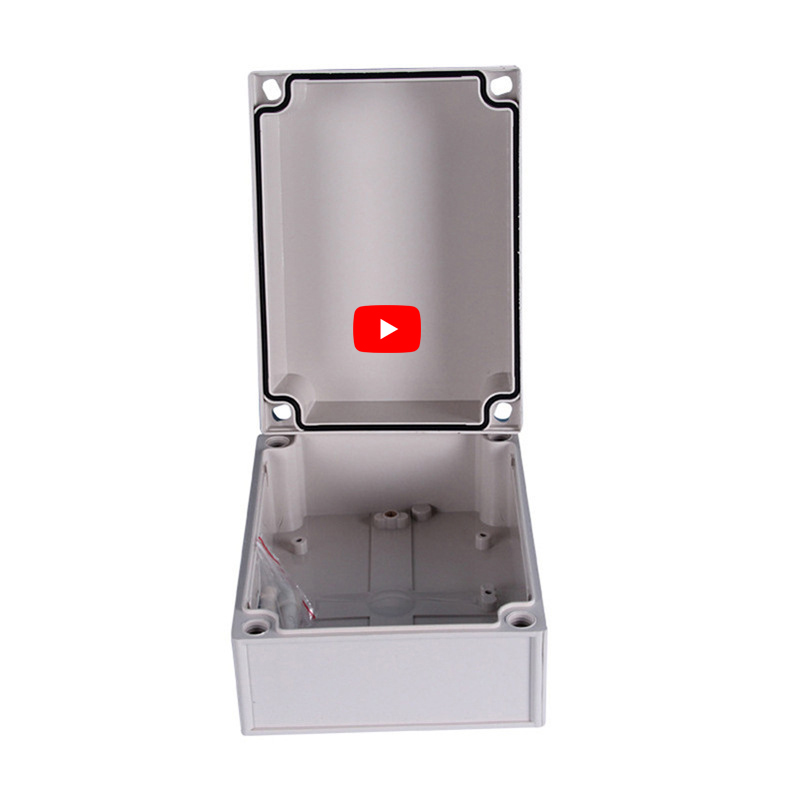
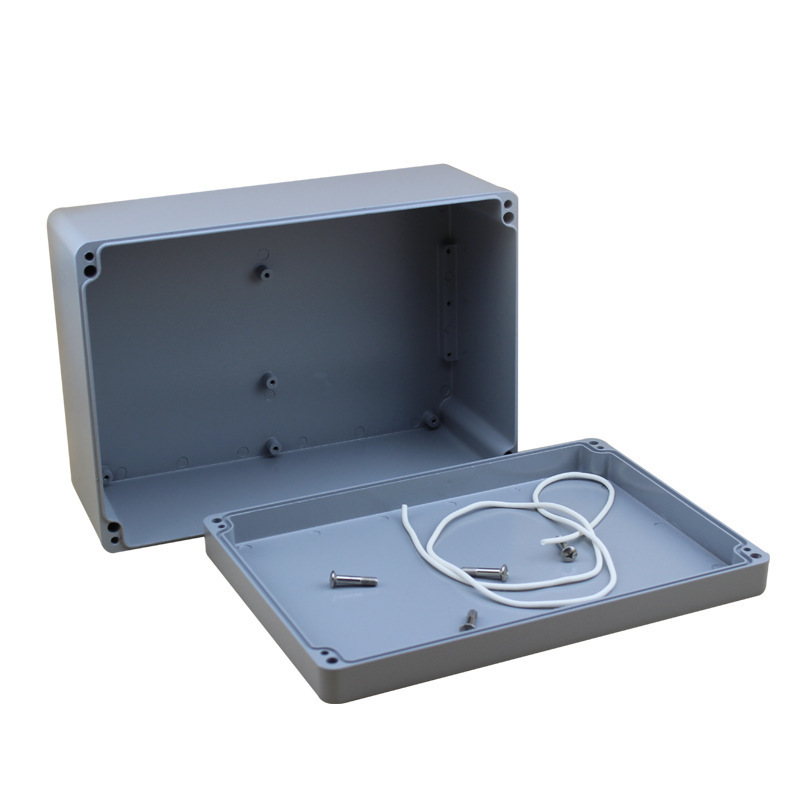
A standard aluminum enclosure designed for IP67 protection normally consists of two main components:
-
Base housing
-
Lid (top cover)
For the example enclosure discussed here, the approximate dimensions are:
-
116 × 116 × 41 mm
(4.57 × 4.57 × 1.61 inches)
Wall thickness:
| Component | Thickness |
|---|---|
| Base | ~2.67 mm |
| Lid | ~3.30 mm |
These thickness values are typical for aluminum die casting. Wall thickness between 2 mm and 4 mm generally provides good casting quality while maintaining sufficient mechanical strength.
Why Draft Angles Are Necessary in Die Casting
In aluminum die casting, vertical walls cannot be perfectly straight. A draft angle must be introduced so that the solidified casting can be released from the steel mold without sticking.
Without a draft angle, several production problems may occur:
-
Surface scratching during ejection
-
Deformation of thin walls
-
Difficulty removing the casting from the mold
-
Accelerated wear on the tooling
Typical draft recommendations in aluminum die casting are:
| Surface | Recommended Draft |
|---|---|
| External surfaces | ~1° |
| Internal walls | 1–2° |
For an enclosure with a wall height of about 41 mm, a 1° draft would theoretically produce a dimensional difference of roughly 0.7 mm between the top and bottom edges.
In many enclosure designs, engineers reduce the draft angle to around 0.4°–0.5° to minimize visible dimensional differences between the lid and base. Even with this reduced draft, a small dimensional offset is unavoidable.
The Appearance Challenge: Lid and Base Alignment
From the customer's perspective, it is often desirable that the lid and base appear perfectly aligned once assembled. A visible step or offset along the outer edges can affect the visual quality of the enclosure.
However, due to the draft angle required in die casting, achieving perfectly identical outer dimensions directly from casting is not realistic.
To address this issue while keeping the manufacturing process stable, many manufacturers adopt a hybrid process.
Combining Die Casting and CNC Machining
A practical solution used in many industrial enclosure projects is:
Die Casting → CNC Machining → Assembly
The workflow is straightforward:
-
The enclosure components are die cast with the required draft angles to ensure reliable mold release.
-
After casting, the critical outer edges of the lid and base are CNC machined.
-
Machining removes the small dimensional offset created by the draft angle, allowing the final external dimensions to match.
This method provides several benefits:
-
Maintains stable die casting production
-
Achieves clean external alignment
-
Improves assembly precision
-
Ensures consistent sealing surface quality
Although machining adds an additional step, it is widely used in higher-quality enclosures where appearance and sealing performance are both important.
The Role of the O-Ring Silicone Seal
The sealing system is the most critical element for achieving IP67 protection.
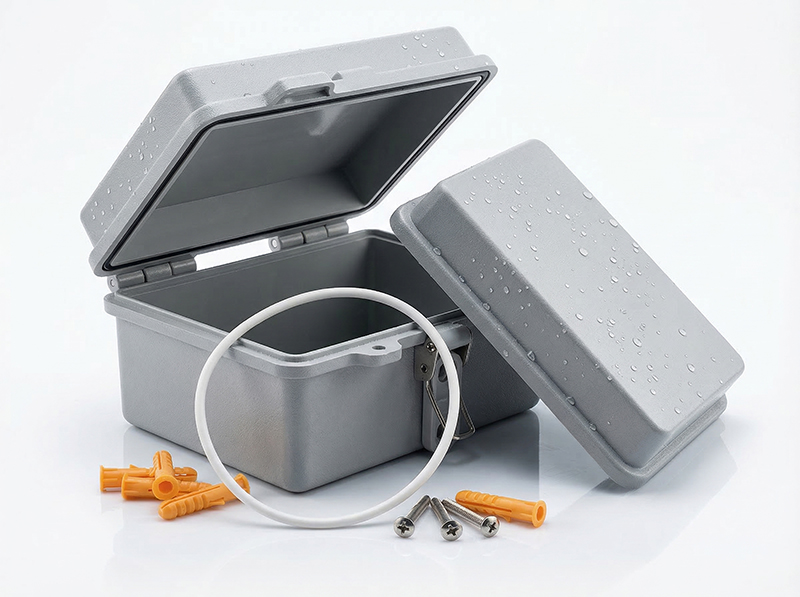
Most die-cast enclosures use a silicone rubber O-ring gasket installed in a machined groove between the lid and base.
Silicone O-rings are commonly selected because they provide:
-
Excellent elasticity
-
Wide temperature resistance
-
Good weather and UV resistance
-
Long service life
When the lid is tightened with screws, the O-ring is compressed between the two parts, forming a continuous sealing barrier that prevents water or dust from entering the enclosure.
Designing the O-Ring Groove
The sealing groove must be carefully designed to achieve proper compression. Typical engineering considerations include:
O-ring compression ratio
For silicone O-rings, recommended compression is typically:
-
20% – 30%
This range provides reliable sealing while preventing excessive stress on the gasket.
Surface finish
The sealing surfaces should be smooth enough to prevent leakage paths. Machined aluminum surfaces generally provide the required finish.
Groove location
The groove is usually placed on the base housing, while the lid provides the flat compression surface.
Continuous sealing path
The groove must form a closed loop around the entire enclosure perimeter to maintain IP protection.
Machining Requirements for Sealing Surfaces
To ensure consistent sealing performance, the surfaces contacting the O-ring are usually CNC machined after casting.
Typical tolerances for sealing surfaces are:
-
±0.05 mm (±0.002 in)
This precision ensures that the O-ring compression remains uniform around the entire enclosure, which is essential for achieving reliable IP67 sealing.
Conclusion
Designing a dependable IP67 aluminum die-cast enclosure requires careful coordination between product design and manufacturing engineering. Elements such as draft angles, CNC finishing, and O-ring sealing geometry all contribute to the final performance of the enclosure.
By combining die casting for structural efficiency, precision machining for dimensional accuracy, and a properly designed silicone O-ring sealing system, manufacturers can produce enclosures that meet both aesthetic expectations and demanding environmental protection standards.