




An Engineer-Oriented Selection Guide
Choosing the correct material for an electrical enclosure is a critical engineering decision. The enclosure material directly affects corrosion resistance, mechanical strength, thermal behavior, certification compliance, service life, and total system cost.
This guide is written for engineers and technical teams involved in industrial control systems, IoT devices, power distribution, and embedded electronics, with a focus on practical material selection rather than catalog-level comparisons.
Why Enclosure Material Selection Matters
From an engineering perspective, an enclosure is part of the system—not an accessory. A poor material choice can lead to:
- Premature corrosion or surface degradation
- Insufficient structural strength or vibration resistance
- Overheating due to poor thermal performance
- Difficulty passing IP or environmental tests
- Increased maintenance or replacement cost
- Material selection should always start from the actual operating environment, not from price alone.
Key Environmental Factors Engineers Should Evaluate
Before selecting an enclosure material, engineers should clearly define the following conditions:
- Indoor or outdoor installation
- Exposure to moisture, rain, or condensation
- Presence of chemicals, salt spray, or cleaning agents
- Ambient temperature range and heat load
- Mechanical impact, vibration, or load requirements
- Expected service life of the equipment
- These parameters form the baseline for material evaluation.
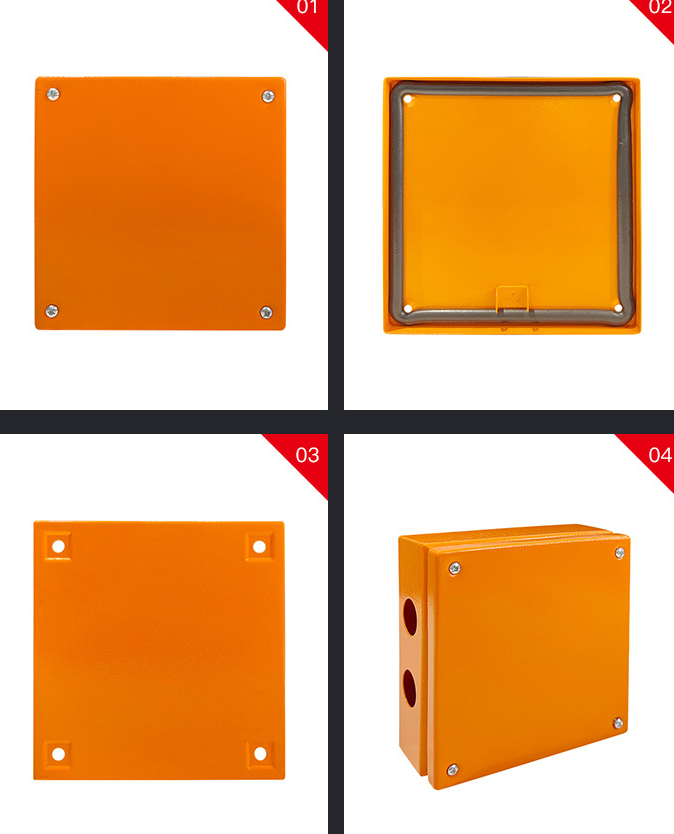
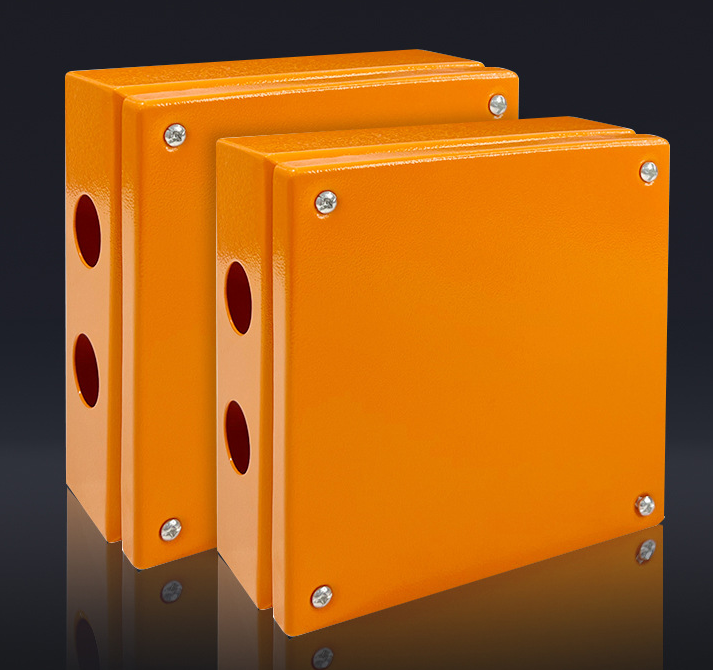
304 Stainless Steel Electrical Enclosures
When Engineers Choose 304 Stainless Steel
304 stainless steel is one of the most commonly specified materials for industrial electrical enclosures.
Engineering advantages:
- Excellent corrosion resistance in most industrial environments
- High mechanical strength and rigidity
- Stable performance over a wide temperature range
- Suitable for hygienic or wash-down environments
- Long service life with minimal surface degradation
Because of these properties, 304 stainless steel enclosures are widely used in:
- Industrial control boxes
- Junction boxes and distribution boxes
- Instrument enclosures
- Food processing and medical equipment
- Engineering Considerations
- Heavier than aluminum; mounting method should be evaluated
- Thermal conductivity is lower than aluminum, so ventilation or heat sinks may be required for high-power systems
- Higher material and fabrication cost compared to carbon steel
- For outdoor or coastal environments with high chloride exposure, engineers may also consider 316 stainless steel as an upgrade.
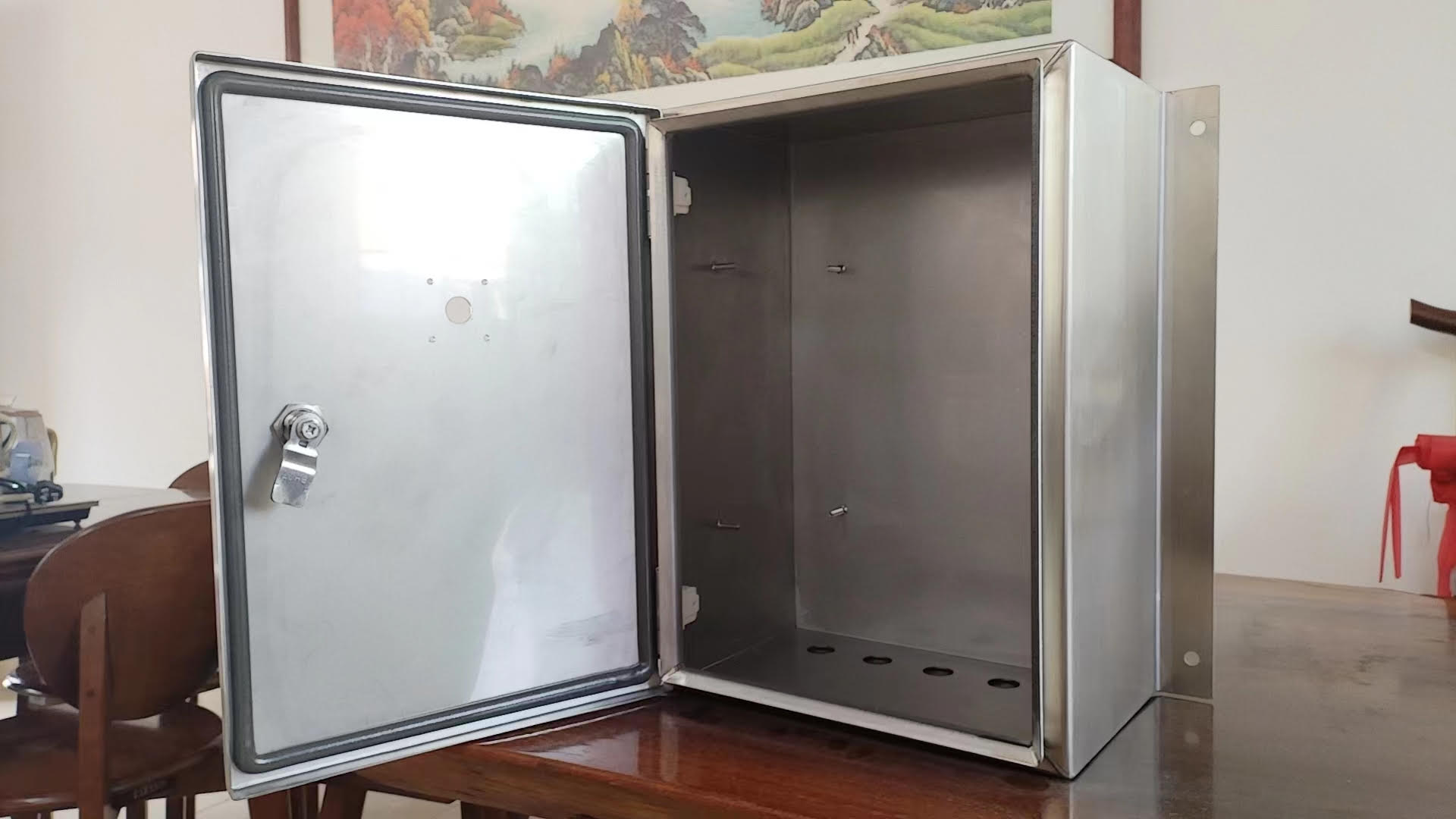
Cold-Rolled Steel and Galvanized Steel Enclosures
Cold-rolled steel enclosures are commonly used for indoor industrial applications where corrosion risk is limited.
Advantages:
- High structural strength
- Excellent machinability
- Lower material cost
- Limitations:
- Requires surface treatment (powder coating or painting)
- Not suitable for wet or corrosive environments without protection
- Galvanized Steel
- Galvanized steel provides improved corrosion resistance compared to bare carbon steel.
It is often selected for:
- Semi-outdoor installations
- Utility and power distribution boxes
- Cost-sensitive industrial projects
Aluminum and Die-Cast Aluminum Enclosures
Aluminum enclosures are preferred when weight reduction and thermal performance are important.
Engineering advantages:
- Lightweight, reducing load on mounting structures
- Excellent thermal conductivity
- Good corrosion resistance in most environments
- Typical applications include:
- Embedded PC cases
- Communication equipment
- Electronic instruments
- Die-Cast Aluminum Housings
- For compact devices and high-volume production, die-cast aluminum housings offer:
- High dimensional consistency
- Integrated mounting and heat dissipation features
- Reduced per-unit cost at scale
- Die-cast housings are commonly used for IoT gateways, sensor enclosures, and embedded systems.
Matching Material to IP Rating and Compliance
- Material selection is closely linked to IP rating and certification requirements.
- Stainless steel and aluminum are suitable for IP65 and above
- Surface flatness and rigidity affect gasket sealing performance
- Thinner materials may deform under gasket compression
- Engineers should evaluate material thickness, door structure, and fastening method together with material choice to ensure stable sealing performance.
- In many industrial projects, a higher initial material cost (such as stainless steel) can significantly reduce long-term operational risk and downtime.
Conclusion
Selecting the right electrical enclosure material is a balance between environmental resistance, mechanical performance, thermal behavior, and cost. There is no universal solution—only materials that are more appropriate for specific applications.
Looking for enclosure solutions you can rely on? Hofengfab is here to support your engineering projects.