




Designing a waterproof aluminum enclosure is not just about choosing a strong housing. In many projects we see, the real challenge is making sure the enclosure can reliably meet IP67 sealing requirements under real operating conditions.
In this article we want to share a practical engineering case and walk through several important design considerations, including gasket groove design, sealing materials, and screw placement. These factors often determine whether an enclosure truly achieves IP67 protection.
Understanding the Difference Between IP66 and IP67
Before discussing the design details, it’s important to understand the difference between IP66 and IP67.
-
IP66 means the enclosure is protected against powerful water jets.
-
IP67 significa que la caja puede soportar temporary immersion in water (typically up to 1 meter for 30 minutes).
A die-cast aluminum enclosure without openings can often reach IP66 protection relatively easily.
However, achieving stable IP67 performance requires a more carefully designed sealing structure.
1. The Importance of the Gasket Groove
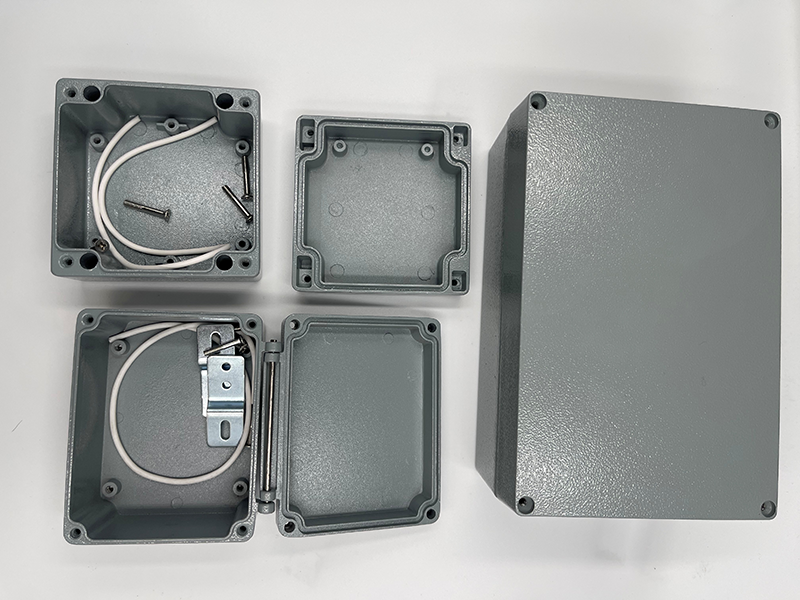
One of the most critical elements in an IP67 enclosure is the gasket groove.
In many cases, the original groove design may not provide enough compression for the sealing gasket. When that happens, the groove often needs to be:
-
Deepened
-
Widened
This allows the gasket to compress properly when the enclosure lid is fastened. Proper compression ensures the gasket fills any microscopic gaps between the mating surfaces.
If the groove dimensions are incorrect, the enclosure may still appear sealed, but under pressure or thermal expansion the seal can fail.
2. Choosing the Right Gasket Material
For high-reliability waterproof enclosures, silicone gaskets are commonly used.
In this design, the selected gasket material has an operating temperature range of:
−50°C to +200°C
Silicone offers several advantages:
-
Excellent elasticity
-
Strong resistance to thermal cycling
-
Long-term stability
-
Reliable compression recovery
These properties make silicone particularly suitable for maintaining consistent IP67 performance over time, even in environments with large temperature fluctuations.
Because the gasket is a critical sealing component, it typically requires a dedicated gasket mold, which adds to the tooling cost. However, this investment significantly improves sealing reliability.
3. Why Screw Placement Matters for Waterproofing
A common concern engineers have is whether screw openings compromise the IP rating.
In reality, screw holes do not automatically reduce waterproof performance if the sealing structure is designed correctly.
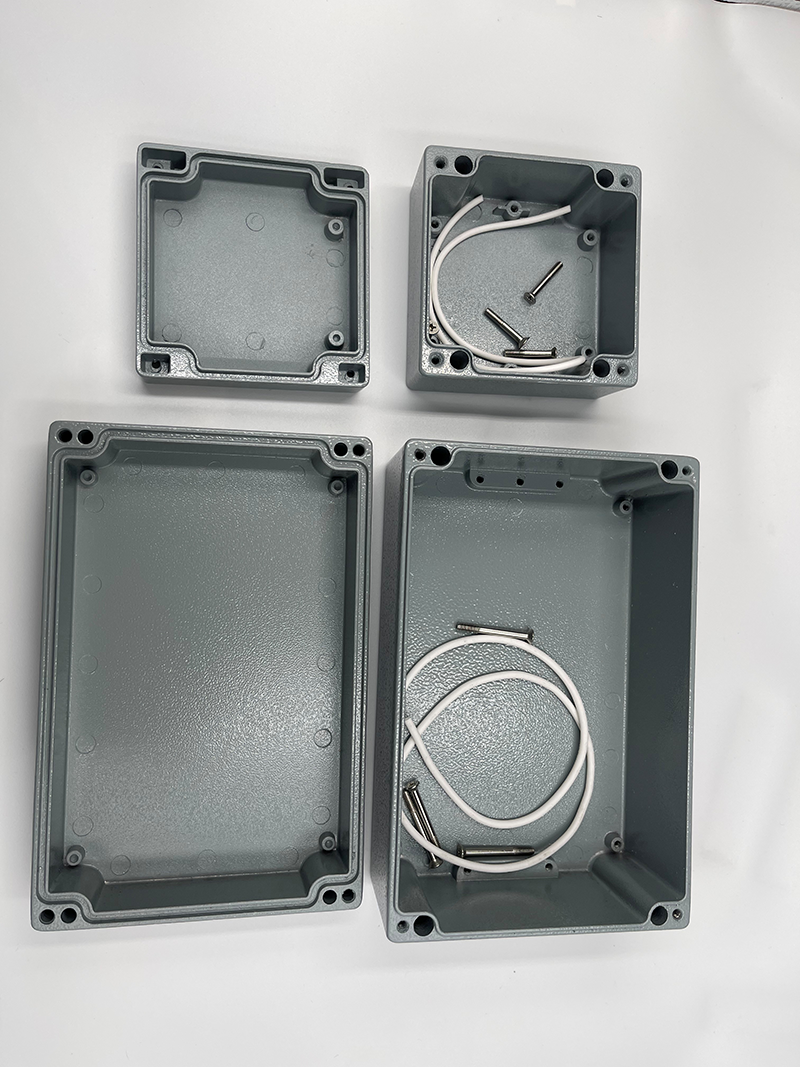
In this enclosure design, the screws are positioned outside the gasket sealing area. This means:
-
Water may enter the screw pockets
-
But it cannot reach the internal cavity
The actual waterproof barrier is created by the compressed gasket between the lid and the base. As long as the gasket seal remains intact, the enclosure maintains its IP67 rating.
4. The Role of Mating Surface Precision
Another often overlooked factor is the flatness and alignment of the mating surfaces.
The contact surfaces between the enclosure lid and base must be carefully machined to ensure:
-
Even gasket compression
-
No micro gaps along the seam
-
Stable sealing under vibration or temperature changes
Without proper machining and surface control, even a high-quality gasket cannot compensate for uneven surfaces.
This is why many manufacturers perform precision machining on sealing surfaces after die casting.
5. From Drawing Optimization to Production
When designing a waterproof enclosure, the process usually involves several engineering steps:
-
Review the original enclosure drawing
-
Optimize the gasket groove design
-
Select appropriate gasket materials
-
Verify screw and sealing layout
-
Confirm machining requirements for sealing surfaces
Only after the final design is confirmed can the tooling process begin.
Taking the time to optimize these details early often prevents costly redesigns later.
Final Thoughts
Achieving reliable IP67 protection in an aluminum die casting enclosure is not just about sealing the lid. It requires careful coordination between several design elements:
-
Proper gasket groove dimensions
-
Suitable gasket material
-
Correct screw placement
-
High-precision mating surfaces
When these elements work together, the enclosure can maintain long-term waterproof performance even under demanding environmental conditions.
For engineers working on industrial electronics, outdoor equipment, or fire safety systems, paying attention to these details during the design stage can make a significant difference in product reliability.
Hofengfab can help optimize your IP67 enclosure 3D structural design and provide customized aluminum die-casting mold manufacturing. Our engineering team can review and improve your design to ensure reliable sealing performance and manufacturability. We also offer custom aluminum die-casting molds with a mold life of ≥100,000 shots under normal production conditions, ensuring stable quality and long-term production efficiency.